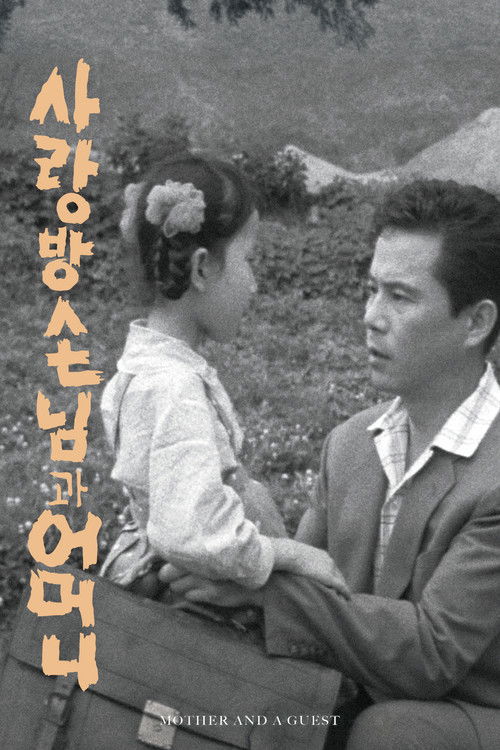
Mother and a Guest
1961
No user ratings available yet
Representation score: 3.6 out of 10
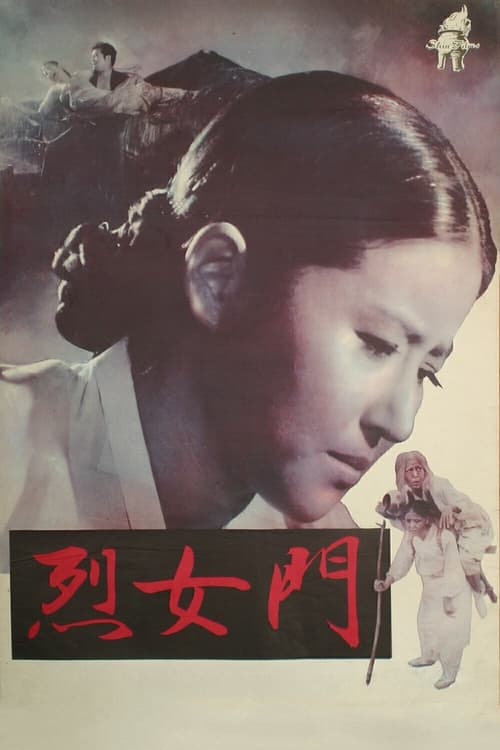
Representation Score
Fair
1962
Director
Shin Sang-ok
Runtime
101 minutes
Average Rating
No ratings yetNew Showbiz Analysis
Shin Sang-ok’s melodrama successfully deconstructs rigid social hierarchies by focusing on a woman's defiance of marital structures. While the film lacks modern markers of diversity like LGBTQ+ representation, it offers a nuanced look at how individual desires clash with institutional morality. The film's strength lies in its critique of the patriarchal family unit. By portraying the in-laws as the main antagonists, the narrative highlights the cruelty inherent in strict social preservation. This transforms the story from a simple scandal into a study of systemic oppression. However, the production is limited by its historical context, resulting in an ethnically uniform cast and a lack of diverse identity markers. The focus remains on the tension between personal truth and traditional Korean social hierarchies.
Category Breakdown
The film does not explicitly depict LGBTQ+ identities. Instead, it focuses on a heterosexual relationship to explore social transgressions.
The protagonist challenges traditional female passivity by taking an active role in her affairs. The central conflict arises from her personal choices and the resulting systemic backlash.
The cast is ethnically uniform, reflecting the film's 1962 South Korean setting. However, the film uses class distinctions to explore power dynamics.
The story criticizes patriarchal Confucian hierarchies and the oppressive noble family. It portrays traditional structures as forces of systemic cruelty.
There is no evidence of characters with visible or invisible disabilities within the narrative.
Present on Screen
Limited or Absent
Official Synopsis
The widow of a nobleman bears a son after having an affair with her servant. The servant and the baby are driven from the home by the woman's irate in-laws when the truth is discovered. Even after the child is grown, no contact is allowed between he and his mother who now denies the events of her past.
1961
1957

1969
1952
2015
1920
1957
1984
No reviews yet. Be the first to share your thoughts on this movie!
Use the rating form above to leave a star rating and optional review.