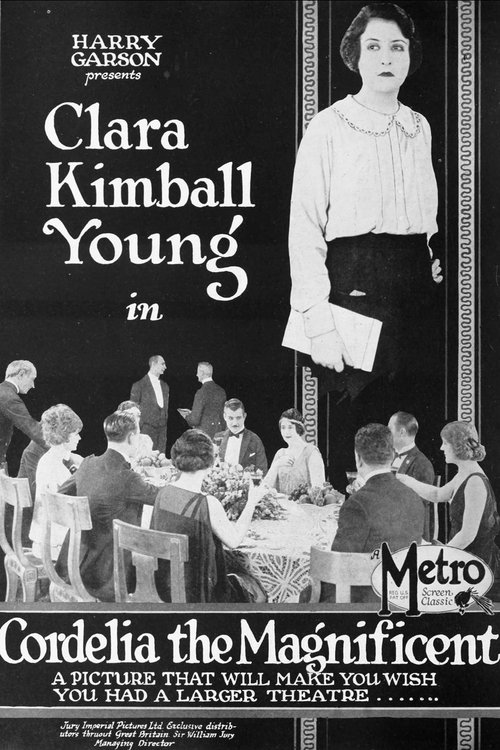
Cordelia the Magnificent
1923
No user ratings available yet
Representation score: 1.4 out of 10
No Poster Available
Representation Score
Limited
1926
PassedDirector
Victor Fleming
Runtime
80 minutes
Average Rating
No ratings yetNew Showbiz Analysis
The film operates as a conventional crime drama of the silent era, reinforcing established social and political hierarchies. The narrative structure relies on classical domestic clichés and patriarchal structures, centering on the influence of a powerful male politician. Representation is limited by the era's studio norms, focusing on straight-centered relationships and traditional familial redemption. While the title hints at disability, the lack of specific character detail makes it difficult to assess how visual impairment is handled. Overall, the work reflects the homogeneous casting and social values of 1920s Hollywood.
Category Breakdown
The story revolves around traditional romantic relationships and family reconciliation. It does not include any representation of LGBTQ+ identities or critiques of the assumption that everyone is straight or cisgender.
The power structure favors male leadership, with Big Bill Devens having significant influence over others. Female characters play important emotional roles but are confined to traditional roles as romantic interests or repentant wives.
The narrative focuses on Western political and legal systems. It does not feature any diverse or non-Anglo-Saxon cast, adhering to the norms of the 1920s studio era.
Themes of forgiveness and working-class stability align with traditional Western values. The film uses established social hierarchies and political institutions as its main setting.
The title suggests a link to visual impairment, but it is unclear if this is literal or metaphorical. It is also uncertain if a character with a disability has a significant role in the story.
Present on Screen
Limited or Absent
Official Synopsis
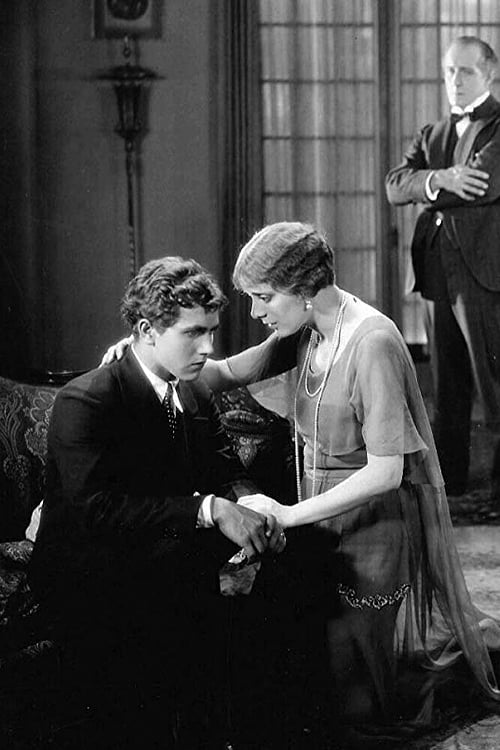
Even though Big Bill Devens is a powerful politician, he still sticks to his working man's roots. His wife walked out on him 20 years before and his daughter, Moira, believes she is dead. Moira falls in love with Hugh Dillon, a handsome young attorney, and Devens gets him a job in the district attorney's office. One night, Devens' wife, now an old, decrepit woman known as Aileen Clayton, returns to ask forgiveness.
1923
1929
1935
1926
1938
1933
1929
1926
No reviews yet. Be the first to share your thoughts on this movie!
Use the rating form above to leave a star rating and optional review.