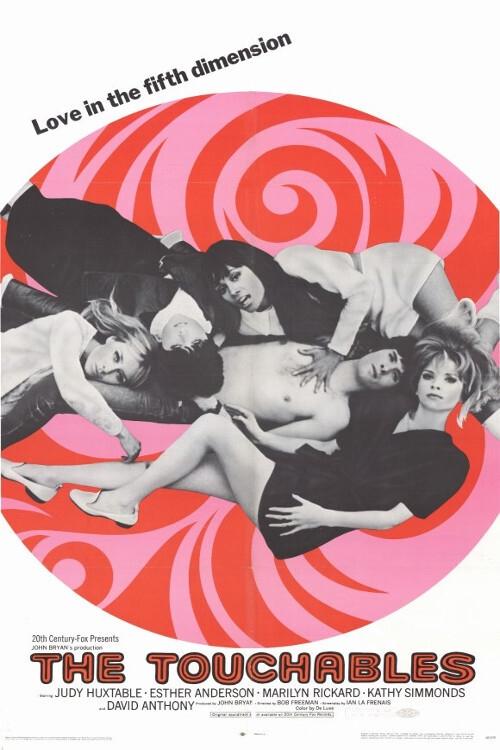
The Touchables
1968
No user ratings available yet
Representation score: 5.5 out of 10

Representation Score
Limited
1970
XDirector
Lee Frost
Average Rating
No ratings yetNew Showbiz Analysis
The film opens with a wealthy industrialist couple driving through the Danish hills, a picture of established comfort and class privilege. This tranquility is shattered when they stop to help a hitchhiking girl, an act of bourgeois decency that immediately turns into a trap. The sold meaning is a generational and class conflict: the older, wealthy couple is kidnapped by a group of drug-influenced youths who use the night to expose the “hidden, depraved thoughts” of the new generation. The camera treats the captors as agents of chaos who dismantle the captives’ social armor, forcing Max and Edith to confront their own vulnerabilities. The ending is a moral verdict on the fragility of the old order; the wealthy couple is left stripped of their status and dignity, while the younger captors retain their agency. The film does not shy away from the violence of this inversion, presenting the youths’ lust and terror as a legitimate, if frightening, counter-narrative to the couple’s complacency. It is a raw, 1970s-era critique of class and age, where the “depravity” of the young is framed as a necessary disruption of the old guard’s hollow respectability.
Category Breakdown
The narrative frames the captors’ “depraved thoughts” as an “orgy of lust,” yet no specific same-sex acts or identities are depicted. The sexual tension remains strictly heterosexual, focusing entirely on the older couple’s violation.
Edith is subjected to “countless indignities” alongside her husband, positioning both as passive victims of the youths’ aggression. The film treats their marital unit as a single target for degradation rather than exploring distinct gendered power dynamics.
The cast includes Orla Nsu as Edith and Leif Betheas as Jorgen, introducing Black characters into the central dynamic. The film does not treat their presence as exotic; they are integral to the kidnapping and the subsequent psychological unraveling.
The wealthy industrialist couple represents the established order, which is violently dismantled by the younger, drug-influenced generation. The film sells a critique of class and generational authority, framing the youth’s “hidden, depraved thoughts” as a liberating force against the old guard.
No characters are depicted with physical, sensory, or cognitive disabilities. The “crazed” state of the captors is attributed to drug use, not inherent impairment.
Present on Screen
Limited or Absent
Official Synopsis
Max C. Kragh, a wealthy industrialist, and his wife Edith are traveling through the hills of Denmark heading toward their weekend retreat, when they see a young girl, Avi, thumbing for a ride. They stop for the girl, and suddenly Max is pulled from the car by two of Avi’s friends, Steen and Jorgen, while Liala watches happily from the other side of the road. Half crazed with drugs, the young folks kidnap Max and Edith and break into an unoccupied house. Now the hidden, depraved thoughts of the young people are brought out into the open. The night becomes an orgy of lust and terror for Max and Edith, who are subjected to countless indignities.
1968

1995
1971

1977
1972

1955
1976
1972
No reviews yet. Be the first to share your thoughts on this movie!
Use the rating form above to leave a star rating and optional review.