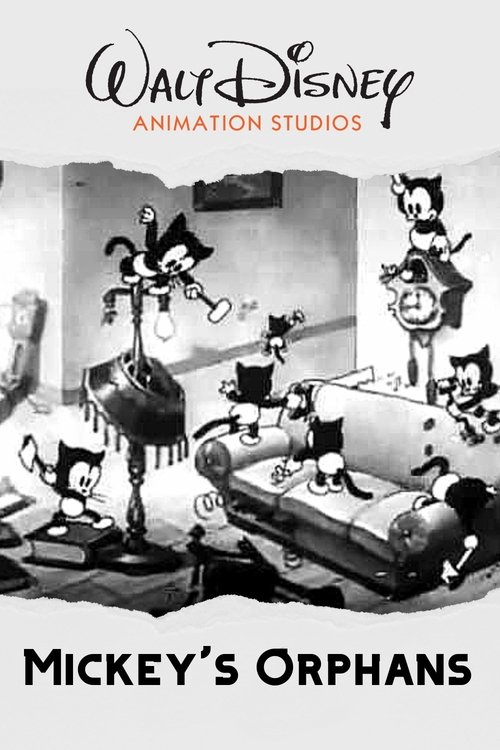
Mickey's Orphans
1931
No user ratings available yet
Representation score: 2.8 out of 10
Representation Score
Minimal
1934
NRDirector
Burt Gillett
Runtime
9 minutes
Average Rating
No ratings yetNew Showbiz Analysis
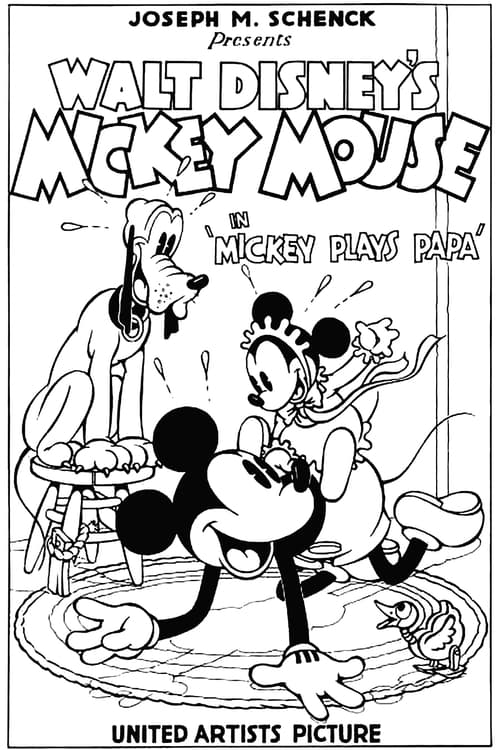
Mickey Plays Papa is a product of its 1934 era, focusing on traditional domestic narratives. It relies on established character archetypes that reinforce existing social hierarchies rather than challenging them. The film lacks complexity in representing multiple aspects of diversity. It maintains a homogeneous cast and conventional family structures. While Mickey shows a leading role through caretaking, the narrative remains rooted in the industry practices of the early 20th century. Ultimately, the work upholds social stability and traditional Western values, offering little in the way of diverse representation or social subversion.
Category Breakdown
The film does not include any LGBTQ+ characters or themes. It assumes everyone is straight and cisgender.
Mickey and Pluto play traditional roles of protector and provider. The absence of female characters prevents any challenge to gender hierarchies.
The cast is made up of similar animal types. There is no evidence of diverse ethnic backgrounds or race-bent casting.
The story upholds traditional Western values of family and community. It reinforces the idea of a nuclear family through the discovery of a foundling.
No characters are shown with disabilities, either visible or invisible. There is no depiction of neurodivergence or physical impairments.
Present on Screen
Limited or Absent
Official Synopsis
Mickey and Pluto are reading scary stories; they go to investigate a noise and find a foundling mouse that's been left on the porch.
1931
1931
1933
1934
1936
1932
1935
1934
No reviews yet. Be the first to share your thoughts on this movie!
Use the rating form above to leave a star rating and optional review.