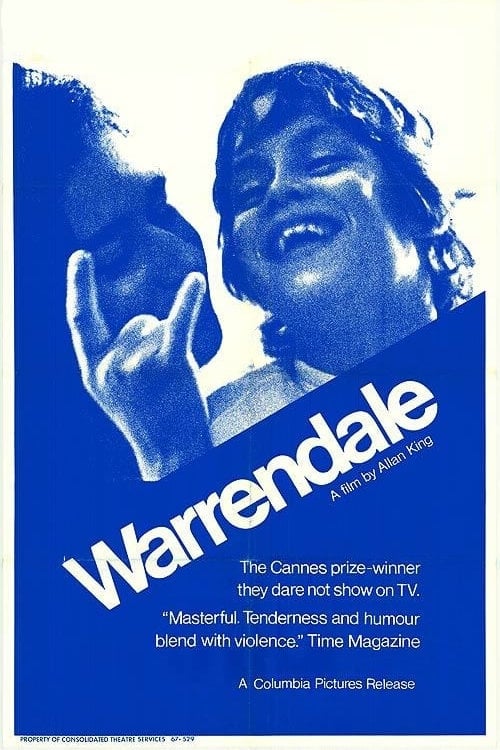
Warrendale
1967
No user ratings available yet
Representation score: 5.6 out of 10
Representation Score
Fair
1973
Director
Allan King
Runtime
95 minutes
Average Rating
No ratings yetNew Showbiz Analysis
Allan King’s Direct Cinema approach centers on the adolescents' ability to act rather than didactic instruction. By balancing the number of boys and girls, the film dismantles traditional authority-subject hierarchies. The documentary observes identity development in a non-traditional communal environment. It prioritizes fluid, observational exploration over rigid mid-20th-century social norms. While the film succeeds in providing a balanced gender demographic and challenging institutional norms, it lacks specific data on racial, ethnic, and disability representation.
Category Breakdown
The film captures the fluid social dynamics of teenagers but does not confirm specific LGBTQ+ identities or relationships.
The film features an equal number of boys and girls, creating a balanced gender demographic. This setup allows participants to explore social roles independently of traditional hierarchies.
No information is available about the racial or ethnic makeup of the participants, so a definitive assessment cannot be made.
By isolating youths from conventional institutions, the film emphasizes individual subjective experiences over societal norms.
There is no specific evidence indicating the presence of physical or neurodevelopmental disabilities among the participants.
Present on Screen
Limited or Absent
Official Synopsis
Five boys and five girls ages 13 to 19 live on a farm for ten weeks, to be filmed, and to see what might emerge for each of them personally.
1967

2010
2017

2020
2017

2002
2015

2016
No reviews yet. Be the first to share your thoughts on this movie!
Use the rating form above to leave a star rating and optional review.