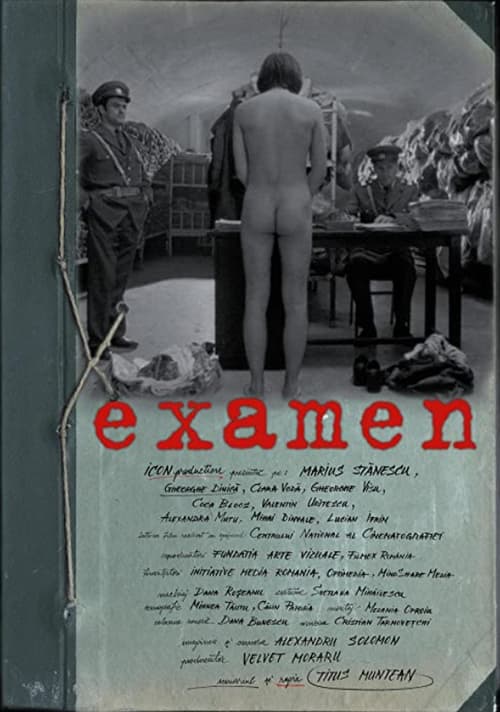
Exam
2003
No user ratings available yet
Representation score: 3.5 out of 10

Representation Score
Fair
2019
Director
Andrei Cohn
Runtime
126 minutes
Average Rating
No ratings yetNew Showbiz Analysis
Arest is a historical drama that prioritizes systemic critique over demographic diversity. Set in 1983 Romania, the film examines the tension between personal autonomy and state surveillance. The narrative strength lies in its exploration of how institutional power infringes on personal freedom. By shifting from a space of bodily liberation to state-mandated confinement, it highlights the vulnerability of individuals. While the film lacks explicit markers of multi-layered identities, it provides a deep look at the erosion of social trust and the corruption of state institutions.
Category Breakdown
The film explores bodily autonomy and non-traditional social norms through a nudist setting, but it doesn't explicitly confirm any specific LGBTQ+ character identities or storylines.
The narrative focuses on a family unit but subverts patriarchal roles when the male architect is suddenly arrested. The specific roles and actions of the wife and children remain unclear.
Set in Romania, the film centers on a specific national context and does not prioritize multi-ethnic casting or diverse demographic representation.
The film effectively critiques totalitarianism and state oppression, showing how centralized power and the Security Service disrupt family units and individual identities.
There are no characters with visible or invisible disabilities mentioned in the narrative.
Present on Screen
Limited or Absent
Official Synopsis
In August 1983, architect Dinu Neagu together with his wife and two children, a boy and a girl, are on a beach of nudists near an industrial area. He is arrested and taken to Bucharest police office, where he is imprisoned in a cell together with Vali, a collaborator of the Security Service.
2003

1985
1993

1970
1993

1978

2014

2019
No reviews yet. Be the first to share your thoughts on this movie!
Use the rating form above to leave a star rating and optional review.