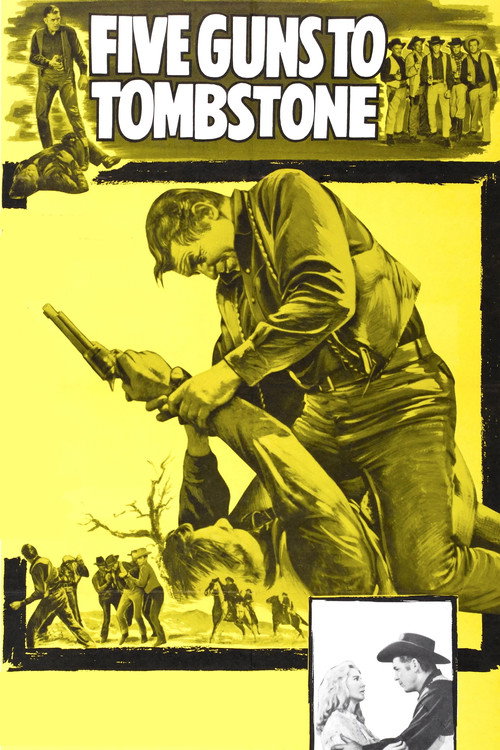
Five Guns to Tombstone
1961
No user ratings available yet
Representation score: 1.6 out of 10
Representation Score
Minimal
1956
ApprovedDirector
Sidney Salkow
Runtime
79 minutes
Average Rating
No ratings yetNew Showbiz Analysis
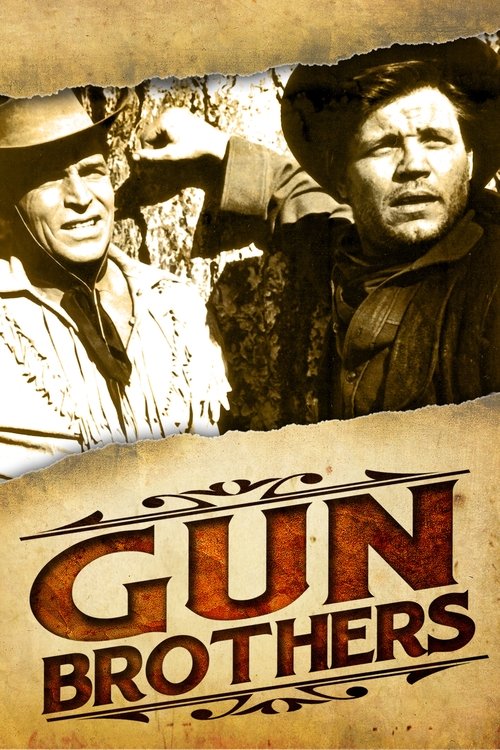
Gun Brothers is a classic mid-century Western that emphasizes traditional social structures and straightforward moral codes. The film leans heavily on established genre clichés, focusing on the clash between law-abiding citizens and outlaws within an Anglo-centric setting. The narrative fails to represent LGBTQ+ identities or disabilities. The social landscape is uniform, offering limited perspectives on diversity beyond the typical frontier expansionist viewpoint. Gender roles are strictly defined, with male characters driving the action while female characters primarily serve as catalysts or recipients of protection, reinforcing conventional gender hierarchies common to 1950s cinema.
Category Breakdown
The film does not include any LGBTQ+ characters or stories. Relationships focus solely on traditional romantic and family bonds.
Men play key roles in driving the plot through conflicts with soldiers and outlaws. Female characters like Rose Fargo mainly serve as companions or damsels in distress, lacking independent ability to act.
The cast is mostly white, reflecting the Anglo-centric perspective of 1950s Westerns. There are no characters of color in positions of power or influence.
The story upholds traditional Western values such as frontier justice and homesteading. It emphasizes an absolute moral code centered around established authority and domestic life.
The film does not depict any physical or cognitive disabilities. Characters are shown as having standard physical abilities typical of action-oriented Westerns.
Present on Screen
Limited or Absent
Official Synopsis
Recently discharged cavalry sergeant Chad Santee joins his brother, Jubal, and discovers that Jubal is a wanted outlaw. On the way he meets Rose Fargo and rescues her from the unwanted advances of a gambler, "Blackjack". When Chad and Rose arrive they find that Jubal and his partner, Shawnee, are really rustlers and outlaws. Jubal tries to get Chad to join them but he refuses, and leaves to set up his own homestead with Rose at his side. Later, the repentant Jubal comes to join him. Shawnee, angry at what he considers a double-cross, attacks the brothers with his gang.
1961

1939
1952
1958

1955

1968
1943
1946
No reviews yet. Be the first to share your thoughts on this movie!
Use the rating form above to leave a star rating and optional review.