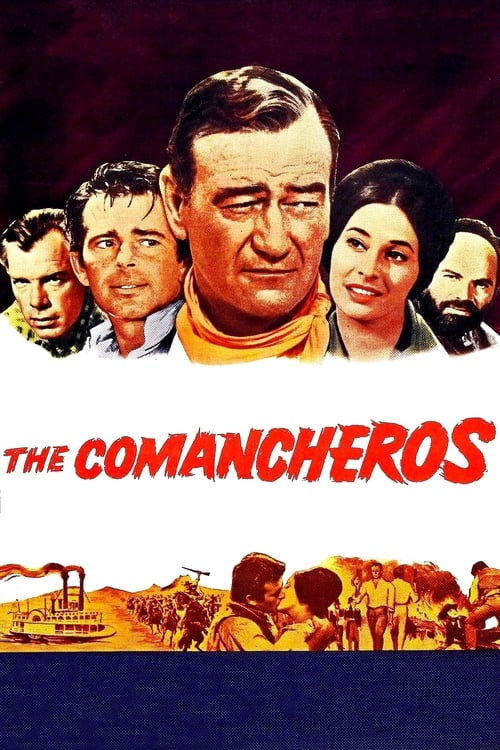
The Comancheros
1961
No user ratings available yet
Representation score: 0.8 out of 10

Representation Score
Limited
1968
PG-13Director
Andrew V. McLaglen
Runtime
106 minutes
Average Rating
No ratings yetNew Showbiz Analysis
Bandolero! serves as a transitional Western that shifts focus from law and order toward a critical examination of power structures. By reframing outlaws as revolutionary figures fighting a corrupt military establishment, the film challenges traditional genre conventions. While it excels in its racial centering and political depth, it maintains traditional gender hierarchies. The narrative prioritizes identity-driven political struggles over simple moral absolutes, offering a nuanced departure from standard genre formulas.
Category Breakdown
The film does not include any LGBTQ+ characters or themes. The social landscape is strictly oriented towards straight relationships.
Female characters play minor roles, serving as background elements or romantic motivations. The narrative emphasizes masculine archetypes of violence and leadership.
The film centers around a predominantly Mexican cast and the Mexican Revolution. It challenges Anglo-centric narratives by making Mexican revolutionaries the main protagonists.
The story explores anti-authoritarian themes and the lasting effects of colonialism. It portrays the military as an oppressive force, validating the protagonists' rebellion as a necessary political action.
There are no significant depictions of visible or invisible disabilities within the primary character arcs or narrative structure.
Present on Screen
Limited or Absent
Official Synopsis
Posing as a hangman, Mace Bishop arrives in town with the intention of freeing a gang of outlaws, including his brother, from the gallows. Mace urges his younger brother to give up crime. The sheriff chases the brothers to Mexico. They join forces, however, against a group of Mexican bandits.
1961
1961

1965

1954
1965
1946
1951
1959
No reviews yet. Be the first to share your thoughts on this movie!
Use the rating form above to leave a star rating and optional review.