
Decalogue V
1989
No user ratings available yet
Representation score: 1.8 out of 10
Representation Score
Fair
1990
RDirector
Gianni Amelio
Runtime
108 minutes
Average Rating
No ratings yetNew Showbiz Analysis
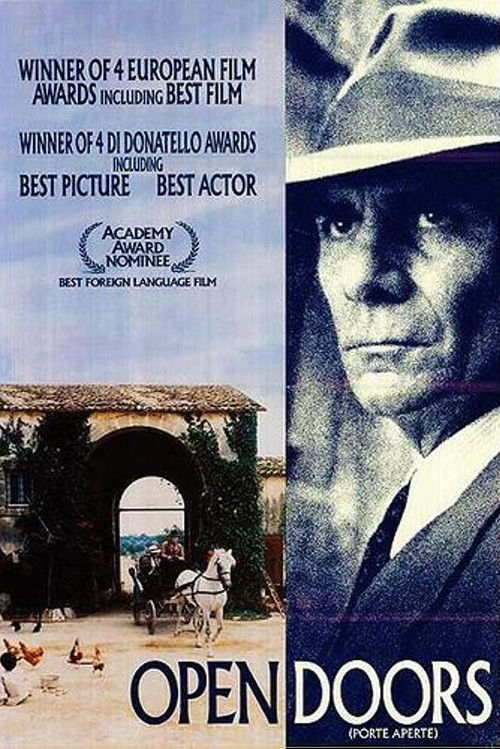
Open Doors is a character-driven legal drama that prioritizes intellectual and ethical inquiry over broad demographic representation. While it lacks representation across most identity categories, it succeeds in challenging institutional hierarchies through its thematic depth. The film's strength lies in its critique of state-sanctioned violence and its exploration of moral relativism. It replaces a simple binary of guilt and punishment with a complex look at systemic ethics. However, the film remains anchored in a traditional patriarchal and homogeneous framework. It lacks meaningful engagement with LGBTQ+ identities, racial diversity, or disability representation.
Category Breakdown
The film does not include characters with non-binary genders or stories that question the assumption that everyone is straight. It follows a traditional story structure that doesn't emphasize LGBTQ+ visibility.
The story focuses on a male-dominated judicial system. Women are mainly shown in domestic settings or as victims, serving as catalysts for male moral dilemmas rather than having their own roles.
Set in late 20th-century Italy, the cast and setting are predominantly white. The film reflects the era's social constraints without using diverse casting to challenge the status quo.
The narrative offers a sophisticated look at Western institutional power. It challenges state-sanctioned morality by favoring legal humanism over strict, punitive traditions.
There are no significant characters with visible or invisible disabilities. The focus remains strictly on the psychological and ethical dimensions of the crime.
Present on Screen
Limited or Absent
Official Synopsis
Tommaso Scalia is a man who commits three murders: he kills his superior who sacked him, the man who replaced him and his wife. He wants a quick trial and an early execution, but an earnest, principled assistant judge looks for a way to save the murderer from being shot, because he does not belive in capital punishment.
1989

1965

1991
1959
1993
2019
1990

1989
No reviews yet. Be the first to share your thoughts on this movie!
Use the rating form above to leave a star rating and optional review.