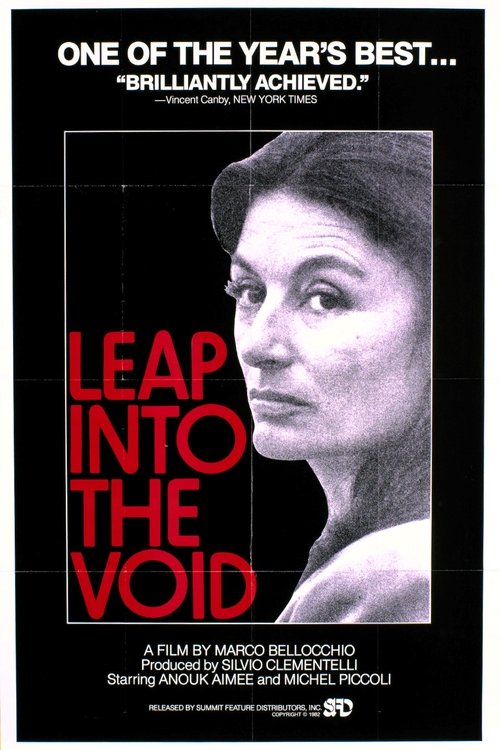
A Leap in the Dark
1980
No user ratings available yet
Representation score: 7.7 out of 10

Representation Score
Good
1965
NRDirector
Marco Bellocchio
Runtime
110 minutes
Average Rating
No ratings yetNew Showbiz Analysis
Marco Bellocchio’s film is a sophisticated critique of mid-century social norms. It challenges the traditional nuclear family and rejects conventional moral hierarchies by exploring anti-social behavior as a reaction to domestic repression through psychoanalytic themes. However, the film’s focus is narrow, lacking broad racial and LGBTQ+ representation and confined to a specific European social class. Its strength lies in its progressive intent, using neurodivergence to question the stability of the bourgeois order.
Category Breakdown
The film does not include explicit LGBTQ+ identities or same-sex intimacy. While the main character exhibits unusual emotional attachments that challenge typical family roles, there are no clear symbols indicating LGBTQ+ themes.
The movie overturns traditional gender roles by showing the mother as a source of instability instead of nurturing. It breaks down the idealized image of the mother by highlighting dysfunctional family dynamics.
Set in a mid-century Italian upper-middle-class environment, the film centers on a homogeneous white family. There is no indication of intentional racial diversity or color-blind casting.
The film provides a deep critique of the Western nuclear family, depicting it as a place of repression. It questions the sanctity of traditional social structures through moral relativism.
The protagonist's epilepsy and mental instability are crucial to the story. These conditions are woven into his role in driving the plot rather than being used merely as plot devices or for ridicule.
Present on Screen
Limited or Absent
Official Synopsis
A deeply disturbed and epileptic young man benignly decides to murder other members of his dysfunctional family for altruistic reasons.
1980
1961
1982

1957
1967

1995
1974
1994
No reviews yet. Be the first to share your thoughts on this movie!
Use the rating form above to leave a star rating and optional review.