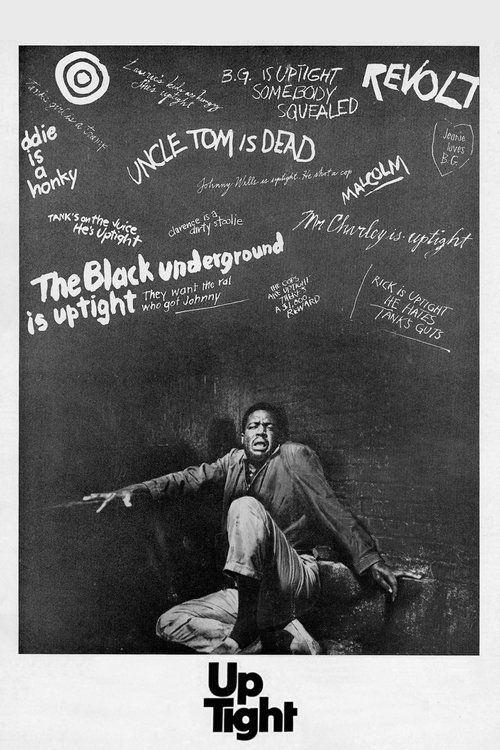
Uptight
1968
No user ratings available yet
Representation score: 5.3 out of 10
Representation Score
Limited
1973
PGDirector
Ivan Dixon
Runtime
102 minutes
Average Rating
No ratings yetNew Showbiz Analysis
Ivan Dixon’s direction creates a foundational piece of Black revolutionary cinema. The film succeeds by centering Black ability to act and using the protagonist's infiltration of the CIA to metaphorically decolonize systemic structures. However, the film's scope is narrow regarding other identity markers. The focus on a male-dominated paramilitary structure limits the presence of women's ability to drive the story and leaves LGBTQ+ representation entirely unaddressed. Ultimately, the work is a sophisticated example of identity-driven storytelling. It challenges mid-20th-century American hegemony by deconstructing Western institutional authority through a lens of racial liberation.
Category Breakdown
The film focuses entirely on racialized political mobilization and revolutionary struggle. There are no LGBTQ+ characters or non-straight relationships featured in the main cast or plot.
The narrative centers on male-driven political organization and paramilitary structures. While it avoids harmful stereotypes of submissive femininity, it lacks significant roles for women and does not challenge traditional gender hierarchies.
The film features an almost entirely Black cast, disrupting Hollywood norms. It centers the Black experience within the CIA, reclaiming ability to act for Black individuals.
The story critiques Western institutions and capitalist structures as oppressive. It prioritizes revolutionary justice and post-colonial themes over traditional legal morality and state authority.
There are no prominent depictions of physical or neurodivergent disabilities that serve as central narrative drivers in this work.
Present on Screen
Limited or Absent
Official Synopsis
A black man plays Uncle Tom in order to gain access to CIA training, then uses that knowledge to plot a new American Revolution.
1968

1966

1971
1969

1972
1997

2021

2006
No reviews yet. Be the first to share your thoughts on this movie!
Use the rating form above to leave a star rating and optional review.