
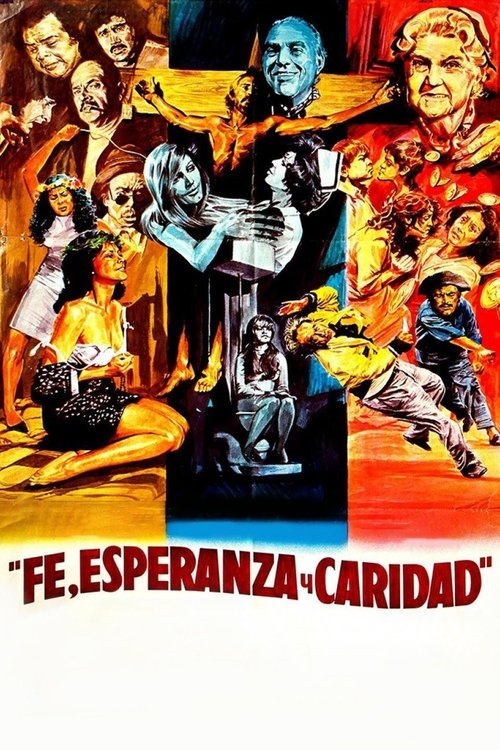
The Braid
1975
No user ratings available yet
Representation score: 8.7 out of 10
Representation Score
Good
1974
Director
Luis Alcoriza, Alberto Bojórquez Patrón, Jorge Fons
Runtime
113 minutes
Average Rating
No ratings yetNew Showbiz Analysis
This anthology serves as a significant work of social realism, using satire to examine social hierarchies and systemic issues. It effectively dismantles traditional structures by presenting virtue through the lens of inequality. The film's strength lies in its localized, post-colonial perspective, which avoids a Western viewpoint and offers a nuanced critique of mid-20th-century societal norms. While the work excels in authentic ethnic representation and institutional critique, it lacks specific representation for LGBTQ+ identities and neurodivergent or physical disabilities.
Category Breakdown
The film does not include explicit representations of non-straight or non-cisgender identities or same-sex relationships. Instead, it focuses on broader social types rather than specific LGBTQ+ identities.
The anthology emphasizes women's experiences, particularly in the face of assault and bureaucratic systems. This shifts the focus away from traditional male-dominated heroic stories.
The film provides a deep look at Mexican identity through a mostly Mexican cast. It highlights the struggles and dignity of working-class Mexicans.
The work criticizes established institutions and their power structures. It prioritizes the lived experiences of those sidelined by society over idealized religious or state-sanctioned morality.
The film examines physical vulnerability and human fragility. However, it focuses on the social impacts of trauma rather than specific disability-related stories.
Present on Screen
Limited or Absent
Official Synopsis
Three episodes. Faith: a woman is attacked. Hope: a fakir is crucified. Charity: a woman faces bureaucracy.
1975
1960

1975

1962

1975

1974
1976

1970
No reviews yet. Be the first to share your thoughts on this movie!
Use the rating form above to leave a star rating and optional review.