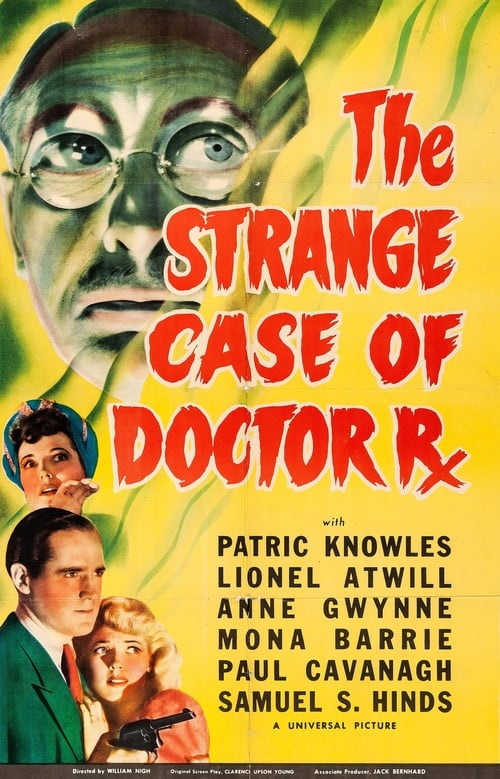
The Strange Case of Doctor Rx
1942
No user ratings available yet
Representation score: 2.8 out of 10

Representation Score
Limited
1949
Director
Jean Faurez
Runtime
88 minutes
Average Rating
No ratings yetNew Showbiz Analysis
Unusual Tales is a product of its time, relying heavily on established genre clichés that emphasize traditional social hierarchies. The film uses archetypes like the victimized woman and the deviant individual to drive its mystery and horror elements. While it delves into complex themes of subjective morality and psychological instability, it does so through a conventional lens of law and order. The narrative lacks the depth needed to challenge the social norms of the late 1940s.
Category Breakdown
The film does not include visible LGBTQ+ identities or same-sex relationships. It follows traditional crime storylines centered around straight relationships.
Women are mainly portrayed as passive victims targeted by a predator. This reinforces older horror movie clichés where men control the plot through criminal actions.
The cast appears homogeneous, fitting the typical makeup of 1949 European films. There is no indication of diverse or non-Anglo-Saxon characters.
The story operates within a standard moral framework of law enforcement versus criminals. It does not significantly challenge institutions or capitalism.
A deformed landlord is used to create fear and disgust. Physical differences serve as a plot device rather than a well-developed character trait.
Present on Screen
Limited or Absent
Official Synopsis
A group of policemen look over three murder cases including a cutthroat that prays on young women, a madman that hid his deformed landlord's corpse in the floor, and a wine aficionado who buries his friend alive.
1942
1971
1969
1943
1965
1968
1931

1933
No reviews yet. Be the first to share your thoughts on this movie!
Use the rating form above to leave a star rating and optional review.