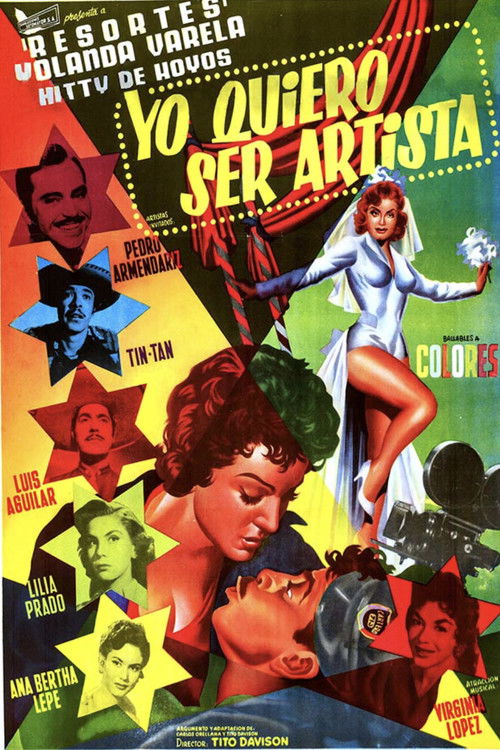
Yo quiero ser artista
1958
No user ratings available yet
Representation score: 2.0 out of 10
Representation Score
Fair
1950
TV-PGDirector
René Cardona
Runtime
97 minutes
Average Rating
No ratings yetNew Showbiz Analysis
This film is a product of the Golden Age of Mexican cinema, deeply rooted in the social and moral frameworks of its era. It prioritizes traditional narrative structures and mid-century melodrama over challenging cultural norms. The representation is largely conventional, focusing on established social hierarchies and domestic roles. While it provides a non-Western perspective on class, it lacks the complexity found in more progressive works. Ultimately, the film reinforces mid-century Mexican familial values without critiquing them.
Category Breakdown
The film does not include any LGBTQ+ characters or narratives. It follows the traditional domestic structures and social conventions of 1950s Mexico.
Braulio Peláez is the central provider, reinforcing traditional gender roles. Female characters drive the subplot of stardom, but their actions remain tied to domestic aspirations.
The film centers Mexican identity and social realities. It offers a localized perspective on class and aspiration, diverging from Hollywood's Anglo-centric norms.
The story celebrates family cohesion, hospitality, and honor. It aligns with mid-century traditional values and the pursuit of upward mobility through conventional means.
Physical disorientation, such as losing glasses, serves as a comedic plot device. This uses impairment to drive the story rather than portraying lived disability.
Present on Screen
Limited or Absent
Official Synopsis
The movie starts with Braulio Peláez (Pedro Infante), a schoolteacher, having just fallen off his horse, representing the situation he and his family are in. The next scenes introduce the viewer to his family and their poor financial and social situation. As Braulio stumbles around looking for his glasses, he causes a famous film star, Alfonso de Madrazo (Rafael Alcaide) to crash his car. Braulio offers him to eat at his house as an apology. Braulio's sister and mother, big film fans, immediately recognise Alfonso and attempt to get him to bring the girl, Luisa Peláez (Irma Dolores) to Mexico City to become a film star. Alfonso agrees and tells them to come to the capital.
1958
1950
1963
1979
1993

1954
1947
1949
No reviews yet. Be the first to share your thoughts on this movie!
Use the rating form above to leave a star rating and optional review.