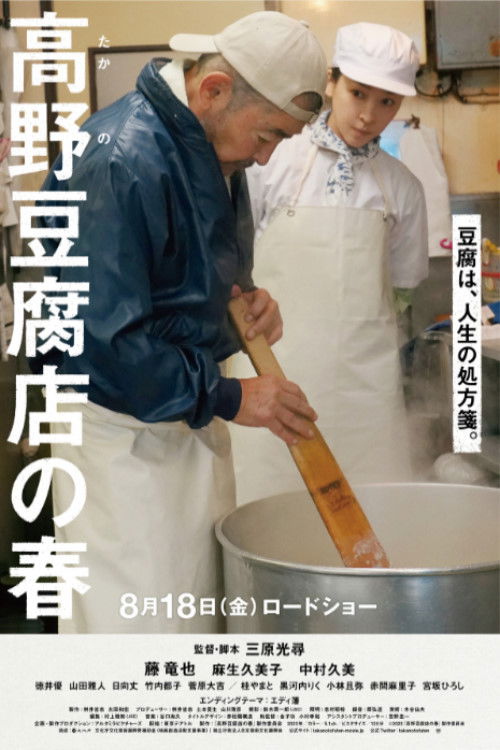
Takano Tofu
2023
No user ratings available yet
Representation score: 1.7 out of 10
Representation Score
Fair
2020
Director
Jimon Terakado
Runtime
105 minutes
Average Rating
No ratings yetNew Showbiz Analysis
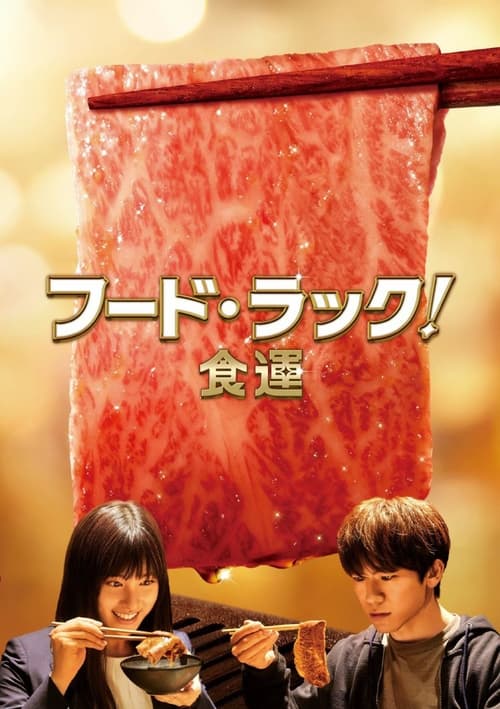
Food Luck! is a character-driven drama that highlights the resilience of women and the challenges faced by small business owners. The narrative emphasizes the emotional bond between a mother and son and the impact of institutional criticism on local livelihoods. However, the film follows traditional dramatic structures without challenging social hierarchies. It lacks the complexity needed to address broader multi-layered issues, focusing instead on conventional familial and domestic themes.
Category Breakdown
The film does not include any explicit mention of LGBTQ+ characters or non-cisgender identities. The story focuses solely on familial and professional relationships.
Women play key roles in the film, such as the strong business owner Yasue and the editor Takenaka Shizuka. The story emphasizes their ability to act in both professional and domestic settings.
As a Japanese production, the film centers on domestic culinary culture. It avoids Western norms but does not explore broader racial diversity.
The story delves into the power dynamics between institutional critics and independent workers. It highlights traditional themes of family legacy and cultural culinary traditions.
There is no information about characters with visible or invisible disabilities or neurodivergence.
Present on Screen
Limited or Absent
Official Synopsis
Yoshito grew up with his mother Yasue after his father passed away. His mother ran a yakiniku (grilled meat) restaurant that his father had left behind. Yoshito enjoyed eating his mother's cooking and their restaurant was loved by many people. Things changed after popular food critic Furuyama Tatsuya published false statements about their yakiniku restaurant. Due to that, their restaurant saw a sharp drop in customers. Yasue worked hard to recover business for the restaurant. Due to Yoshito's behavior in wanting attention from his mom, Yasue decided to shut down the restaurant. 18 years later, Yoshito lives alone and he works as a freelance writer. One day, he takes work for a new online foodie website. He works with editor Takenaka Shizuka. Their first assignment involves yakiniku. Around that time, Yoshito hears that his estranged mother Yasue has collapsed.
2023

2015
2019

2023
2019
2025

1987
2011
No reviews yet. Be the first to share your thoughts on this movie!
Use the rating form above to leave a star rating and optional review.