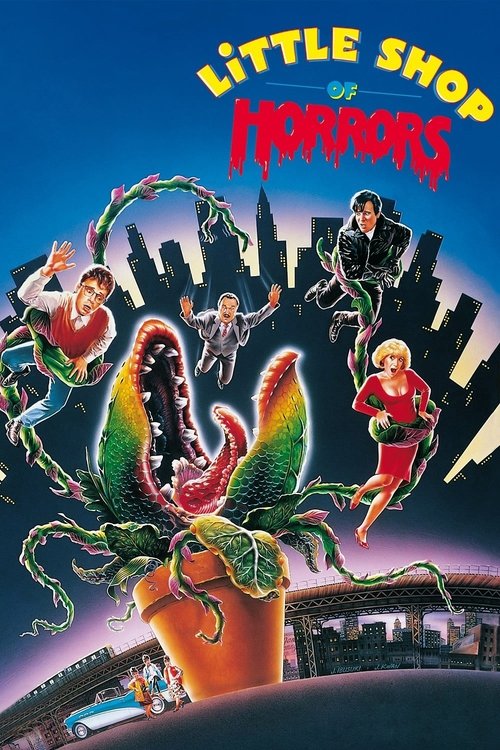
Little Shop of Horrors
1986
No user ratings available yet
Representation score: 5.4 out of 10
Representation Score
Limited
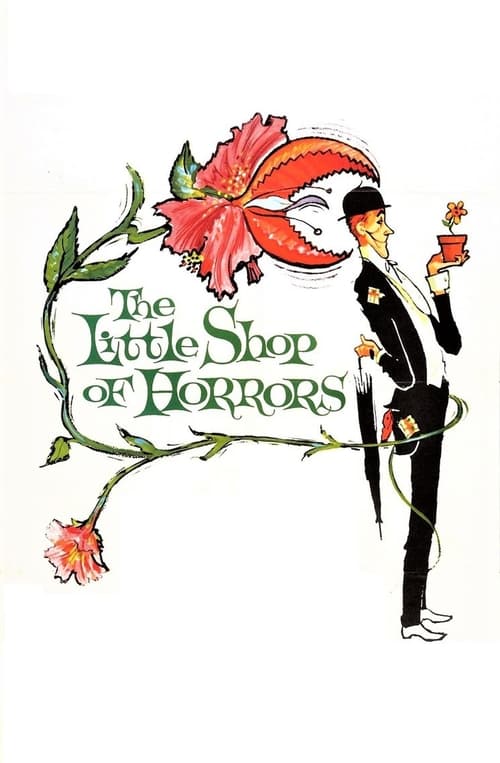
1960
NRDirector
Roger Corman
Runtime
73 minutes
Average Rating
No ratings yetNew Showbiz Analysis
The film reflects its era with a lack of diverse identities and a homogeneous cast. It leans on traditional social structures and fails to offer meaningful diversity in character identities. However, it subverts the typical masculine hero archetype through Seymour’s passive nature. This departure from the competent male leader stereotype prevalent in 1960s cinema adds narrative complexity. Ultimately, the film's strength lies in its satirical critique of the American Dream. It employs dark humor to expose the systemic pressures and moral decay linked to material success.
Category Breakdown
The film does not include any LGBTQ+ characters or explore non-straight relationships. The central romance focuses solely on a traditional heterosexual relationship between Seymour and Audrey.
Seymour challenges traditional gender roles by being passive and socially awkward instead of a strong leader. However, Audrey’s storyline adheres to conventional gender expectations related to romantic advancement.
The cast is primarily white and Anglo-Saxon, mirroring the demographic uniformity of 1960s B-movies. While the Skid Row setting highlights socioeconomic issues, it lacks racial or ethnic diversity.
The story critiques the American Dream and capitalist ambitions using a predatory plant as a metaphor for the moral costs of social climbing.
The film does not explicitly represent physical or neurodivergent disabilities. Seymour’s social ineptitude is portrayed humorously without delving into a nuanced depiction of neurodivergence.
Present on Screen
Limited or Absent
Official Synopsis
Seymour works in a skid row florist shop and is in love with his beautiful co-worker, Audrey. He creates a new plant that not only talks but cannot survive without human flesh and blood.
1986
1959

1992
1935
1975
1964
1987

1973
No reviews yet. Be the first to share your thoughts on this movie!
Use the rating form above to leave a star rating and optional review.