
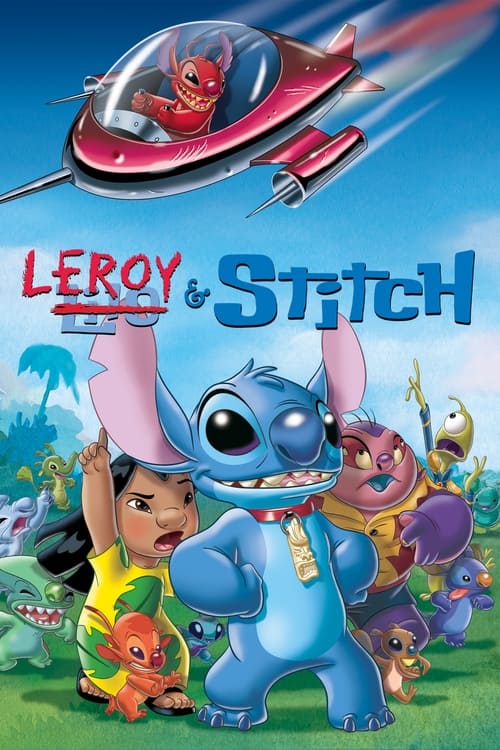
Stitch! The Movie
2003
No user ratings available yet
Representation score: 6.2 out of 10
Representation Score
Good
2006
GDirector
Bobs Gannaway, Tony Craig
Runtime
73 minutes
Average Rating
No ratings yetNew Showbiz Analysis
Leroy & Stitch grounds its sci-fi adventure in a specific, non-Western cultural identity. By focusing on Hawaiian motifs and the concept of Ohana, the film offers a localized perspective. However, it stays within mainstream boundaries, providing strong women's ability to drive the story through Lilo and Nani while avoiding subversion of traditional social hierarchies or critiques of Western institutions. The film balances cultural specificity with a conventional, traditional approach to family and morality.
Category Breakdown
The film does not include any LGBTQ+ characters or non-assuming gender matches what was assigned at birth identities. Relationships focus on traditional family structures and platonic friendships.
Lilo and Nani are strong female characters who take charge of their lives and show resilience. The story focuses on a female-led household rather than a male-dominated structure.
The film highlights the Hawaiian setting and Lilo's heritage through indigenous motifs and the concept of Ohana, which emphasizes family unity.
The story celebrates the Ohana family unit as a source of strength and maintains a traditional moral compass without challenging Western institutions.
Stitch and the experiments represent metaphors for neurodivergence and social non-conformity. These traits are woven into the sci-fi storyline rather than explicitly addressing disability issues.
Present on Screen
Limited or Absent
Official Synopsis
Lilo, Stitch, Jumba, and Pleakley have finally caught all of Jumba's genetic experiments and found the one true place where each of them belongs. Stitch, Jumba and Pleakley are offered positions in the Galactic Alliance, turning them down so they can stay on Earth with Lilo, but Lilo realizes her alien friends have places where they belong – and it's finally time to say "aloha".
2003
2005
2010

2000
2002
1999

2005
2002
No reviews yet. Be the first to share your thoughts on this movie!
Use the rating form above to leave a star rating and optional review.