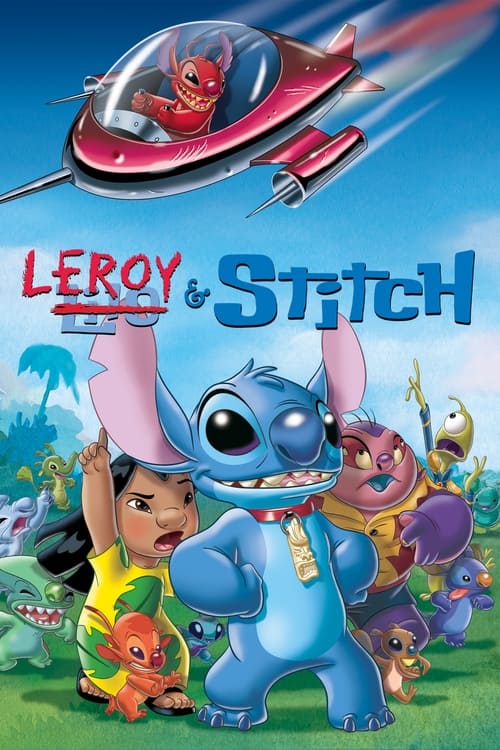
Leroy & Stitch
2006
No user ratings available yet
Representation score: 6.3 out of 10

Representation Score
Good
2003
GDirector
Bobs Gannaway, Tony Craig
Runtime
63 minutes
Average Rating
No ratings yetNew Showbiz Analysis
Stitch! The Movie successfully challenges traditional domestic hierarchies by centering women's ability to drive the story and non-Western cultural values. The emphasis on ohana and chosen family provides a meaningful alternative to standard Western social structures. However, the film relies heavily on science-fiction metaphors to address themes of social non-conformity, which limits the depth of neurodivergent and disability representation. Overall, the film demonstrates how setting and character roles can disrupt conventional expectations of family stability and social hierarchy.
Category Breakdown
The film does not include explicit LGBTQ+ characters or explore non-straight relationships. Instead, it focuses on platonic and familial bonds within the household.
Nani plays a central role as a caregiver and legal guardian, challenging traditional patriarchal roles by driving domestic stability through her actions.
Set in Hawaiʻi, the film highlights a non-Anglo-Saxon context through the concept of ohana. The diverse alien experiments symbolize a heterogeneous, integrated community.
The story prioritizes chosen family models over state-mandated structures, emphasizing communal social support through the cultural value of ohana.
Stitch and the experiments serve as metaphors for neurodivergence and social non-conformity. However, these traits are portrayed through science-fiction clichés rather than grounded, character-driven depictions of disability.
Present on Screen
Limited or Absent
Official Synopsis
The continuing adventures of Lilo, a little Hawaiian girl, and Stitch, the galaxy's most-wanted extraterrestrial. Stitch, Pleakley, and Dr. Jumba are all part of the household now, but what Lilo and Stitch don't know is that Dr. Jumba brought his other alien "experiments" to Hawaiʻi as well.
2006
2005
2011

2018
2002

1997
2014

2005
No reviews yet. Be the first to share your thoughts on this movie!
Use the rating form above to leave a star rating and optional review.