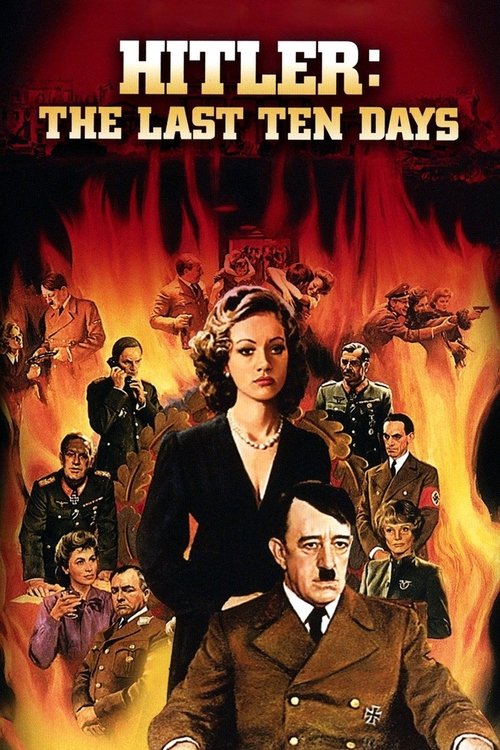
Hitler: The Last Ten Days
1973
No user ratings available yet
Representation score: 0.5 out of 10
Representation Score
Minimal
1989
Director
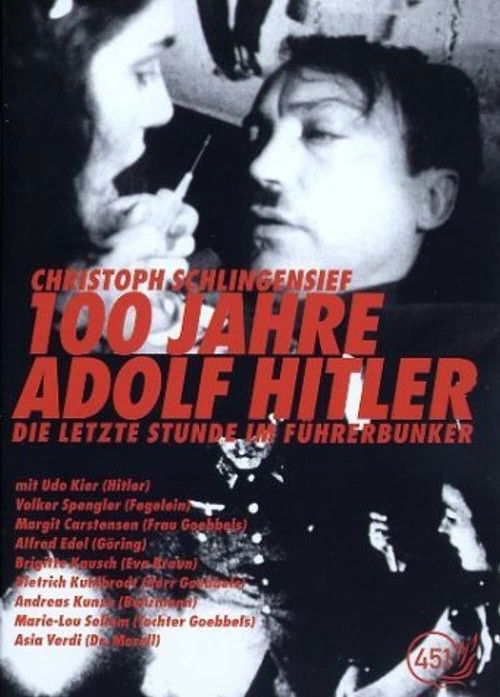
Christoph Schlingensief
Runtime
54 minutes
Average Rating
No ratings yetNew Showbiz Analysis
Schlingensief’s work is a radical, deconstructive experiment rather than a film designed for demographic representation. It uses archival footage to expose the mechanisms of fascism, making it a study of historical trauma rather than a showcase of diverse identities. The low scores in traditional metrics are a direct result of the subject matter. By focusing on the final hours of the Führerbunker, the film inherently engages with a period defined by rigid hierarchies and systemic exclusion. Ultimately, the film's value lies in its ability to question the authority of the historical record. It challenges how history is constructed and consumed, critiquing the very systems that suppress multiple aspects of diversity.
Category Breakdown
The film does not include contemporary LGBTQ+ characters or narratives. It critiques the era's assumptions about straight relationships without showing non-traditional gender identities.
The story focuses on the male-dominated power structures of the Nazi leadership. Although Eva Braun is present, the film's structure is driven by patriarchal control.
The visuals reflect the white-supremacist aesthetics of the Third Reich. It lacks characters of color who play significant roles, as it examines a period where people of color were excluded.
The film effectively critiques traditional Western institutions and historical myths. It uses postmodern techniques to challenge sanitized or heroic versions of history.
There are no characters or themes related to neurodivergence or physical disabilities in the archival material.
Present on Screen
Limited or Absent
Official Synopsis
On 30 April 1945, dictator Adolf Hitler, his wife Eva Braun, and prominent members of the Third Reich live out their final hour in the Führerbunker.
1973

1991
1973

2015

1981
2015
2007
1960
No reviews yet. Be the first to share your thoughts on this movie!
Use the rating form above to leave a star rating and optional review.