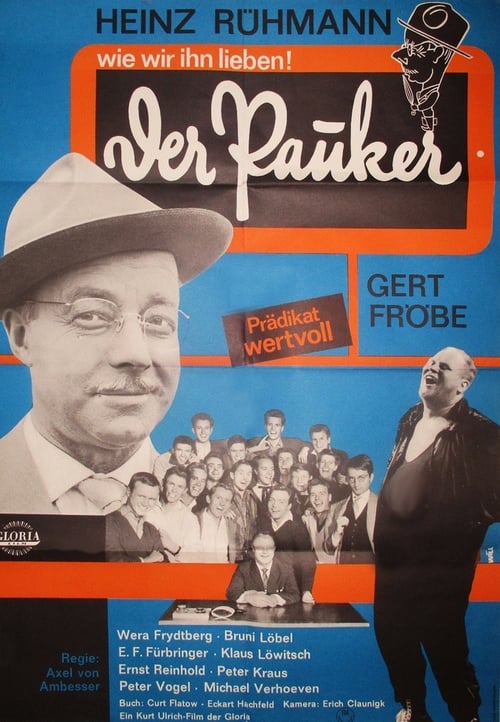
Der Pauker
1958
No user ratings available yet
Representation score: 0.5 out of 10
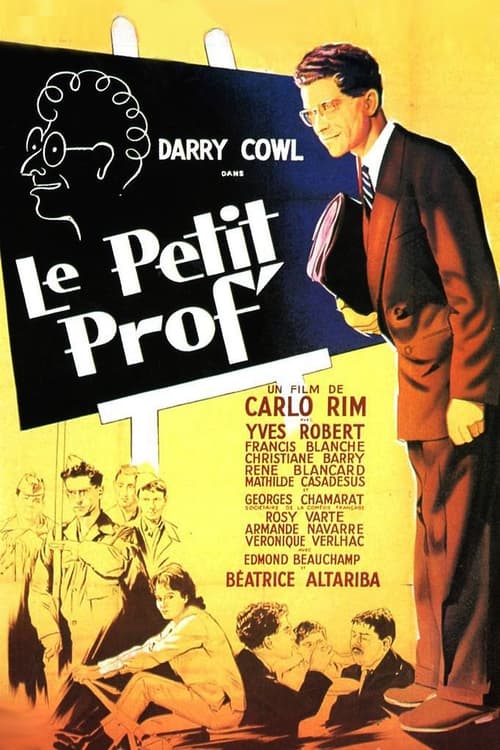
Representation Score
Minimal
1958
Director
Carlo Rim
Runtime
88 minutes
Average Rating
No ratings yetNew Showbiz Analysis
The Little Professor is a period-typical comedy that emphasizes traditional social structures and homogeneous representation. It reflects the mid-20th-century status quo rather than serving as a tool for social change. While the protagonist uses his intellect to challenge institutional authority, this subversion is limited to professional and age-based hierarchies. The film does not engage with complex identity politics or overlapping aspects of diversity. Ultimately, the narrative respects the existing social order, focusing on character-driven humor within a specific, localized cultural framework.
Category Breakdown
The film does not include any LGBTQ+ characters or explore non-straight relationships. It sticks closely to the social norms of the late 1950s without hinting at any queer subtext.
Gender roles are traditional, with female characters like Françoise taking on domestic and supportive roles. The narrative focuses on professional hierarchy without challenging gendered power dynamics.
The cast is homogeneous, reflecting the cultural context of its production era. There is no evidence of racial blending or non-white casting within the social setting.
The story operates within traditional Western social institutions. Conflict is framed as a clash of personalities and teaching methods rather than a critique of religion or the state.
There are no prominent depictions of physical or neurodivergent disabilities. The protagonist's mischievous nature is portrayed as a personality trait rather than an exploration of neurodivergence.
Present on Screen
Limited or Absent
Official Synopsis
Naturally optimistic and mischievous, Jérôme Aubin crossed the time of his adolescence, around 1945, with ease and good humor. The years passed. He married the pretty Françoise, a little neighbor he had known since the age of eight, and soon found himself a secondary school teacher, a little anxious at the thought of facing for the first time students he had been told were particularly turbulent. How will he master this new difficulty? Better than you'd think, thanks to a delicious optimism: boldly going against the grain of conventional methods, he surprises his young audience, thwarting the plans of the dissipated gossips and turning their most tendentious attitudes to his advantage. All this provokes astonishment and concern among the college's leaders. But Jérôme Aubin is no pushover, and even the dreaded general supervisor finds himself obliged to give in to his most audacious initiatives...
1958
1976
1985
1958
1969
1933

1981

1987
No reviews yet. Be the first to share your thoughts on this movie!
Use the rating form above to leave a star rating and optional review.