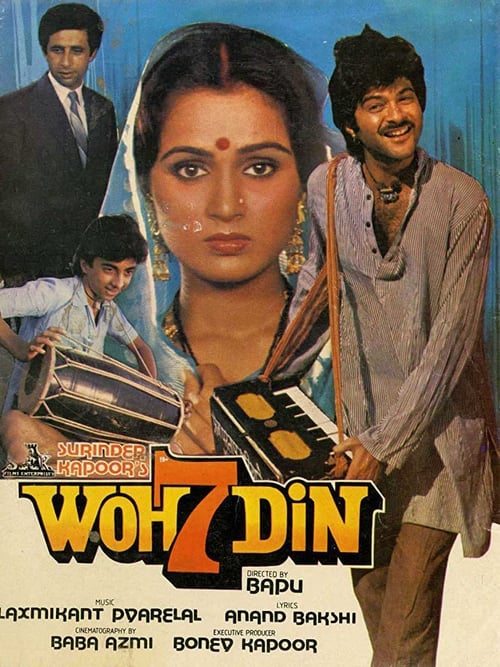
Woh 7 Din
1983
No user ratings available yet
Representation score: 2.0 out of 10
Representation Score
Minimal
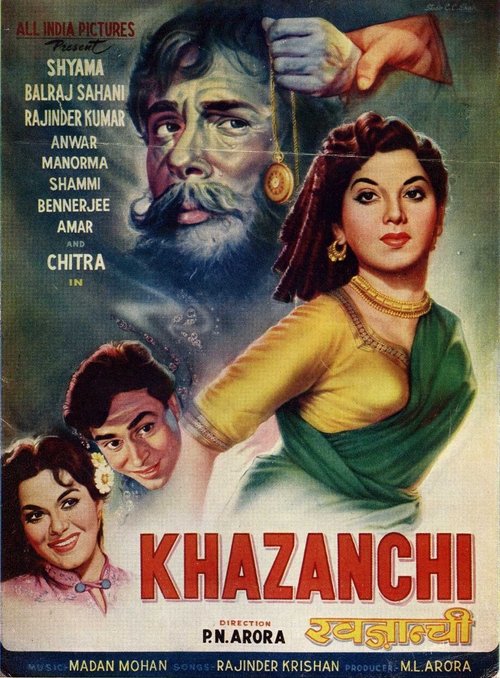
1958
TV-GDirector
P.N. Arora
Runtime
115 minutes
Average Rating
No ratings yetNew Showbiz Analysis
Khazanchi opens in the domestic sphere of the Mohan family, where the father’s role as a bank treasurer mirrors his authority over the household. The film’s argument is clear: social conformity and familial duty are the highest virtues, and individual desire must yield to these values. The camera lingers on the patriarch, framing his decisions as the moral center of the narrative, while the female leads are treated with reverent lighting that emphasizes their purity rather than their agency. The romantic plot between Harish and Usha is framed not as a celebration of personal choice, but as a test of their ability to navigate social expectations. The ending rewards this compliance, resolving conflicts in favor of the traditional family structure. The film’s internal logic is consistent: deviation from social norms leads to suffering, while conformity brings harmony. This 1958 Bollywood drama does not challenge the hierarchies it depicts; it reinforces them, treating the patriarchal family as the unmarked ideal against which all actions are judged. The last image settles on the restored family unit, affirming that the moral order is not just good, but inevitable.
Category Breakdown
The narrative remains strictly heteronormative, defining morality through marriage and familial duty. No same-sex intimacy or non-heteronormative identities appear on screen.
Traditional hierarchies dominate, valuing women for moral purity and domestic harmony. Individual desires are subordinated to family expectations, with the father’s authority remaining unchallenged.
The cast is entirely Indian, reflecting the film’s specific cultural context. No non-Indian characters or cross-cultural dynamics are depicted.
Family duty and social conformity are treated as the highest virtues. The patriarch’s authority and nuclear family structure are upheld as the moral center.
No characters with disabilities are depicted, and no impairment serves as a plot device. The film’s focus remains on social and romantic conflicts within an able-bodied cast.
Present on Screen
Limited or Absent
Official Synopsis
Harish lives happily with his sister Geeta and his father Radhe Mohan. Radhe Mohan is the titular "khazanchi" (treasurer) at the Northern India Bank. Harish and Usha fall in love with each other. However, they face obstacles in their love life due to Usha's stepmother and Harish's father's death.
1983
1994
1982

1989
1973
1972

1978
1982
No reviews yet. Be the first to share your thoughts on this movie!
Use the rating form above to leave a star rating and optional review.