Las manzanas de Dorotea
1957
No user ratings available yet
Representation score: 2.8 out of 10
Representation Score
Limited
1969
Director
Raúl de Anda
Runtime
90 minutes
Average Rating
No ratings yetNew Showbiz Analysis
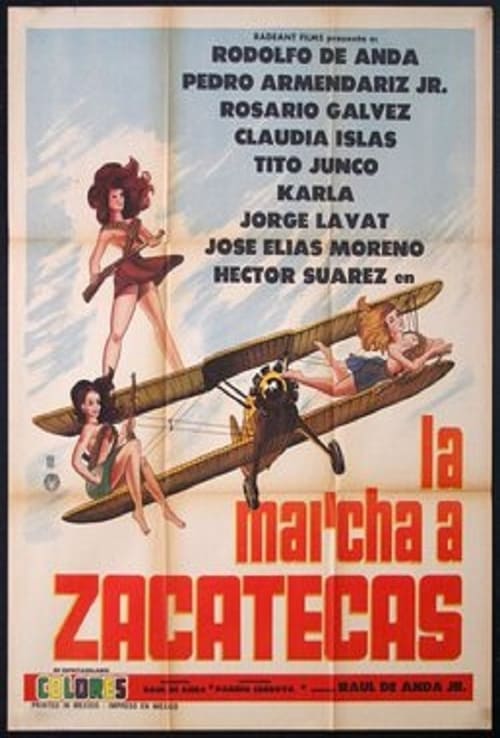
La marcha a Zacatecas succeeds as a culturally specific critique of Mexican social hierarchies. By highlighting the comedic tension between the landed aristocracy and revolutionary forces, the film underscores systemic inequalities and the collapse of Porfirian-era power structures. However, the film is limited by the social norms of its time. It lacks depth in representing gender roles and LGBTQ+ identities, which restricts its inclusivity despite its strong cultural foundation. Ultimately, the work stands out as a meaningful alternative to Eurocentric historical epics by emphasizing the internal socioeconomic struggles of the Mexican people.
Category Breakdown
The film does not include any identifiable LGBTQ+ characters or narratives. Social dynamics are confined to the heterosexual and cisgender norms of the historical period and the era of production.
Leadership and significant roles are primarily held by male military figures. Female characters are mostly heiresses whose roles are defined by domestic duties and inherited wealth, rather than political or combat involvement.
The film provides a detailed look at Mexican social stratification. It avoids Western-centric homogeneity by focusing on a localized perspective that includes both poor peasants and the landed elite.
The narrative criticizes oligarchic structures and centralized authority. It portrays the revolutionary movement as a necessary disruption of oppressive land-ownership systems and established political orders.
There is no significant evidence regarding the portrayal of visible or invisible disabilities within the film.
Present on Screen
Limited or Absent
Official Synopsis
Villistas, army officers, heirs and heiresses all gather at the home of a recently deceased hacendado. Everybody has an agenda, everybody butts heads in comical ways. Or not so much.
1957
1985
1971

1963

2019
1978
1970
1965
No reviews yet. Be the first to share your thoughts on this movie!
Use the rating form above to leave a star rating and optional review.