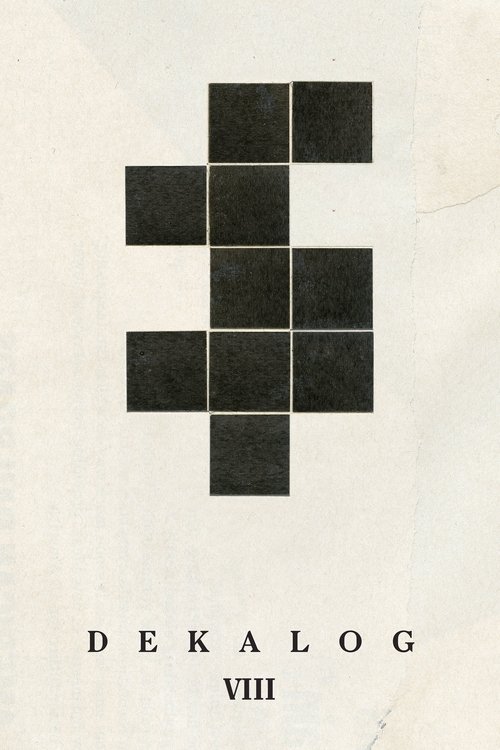
Decalogue VIII
1989
No user ratings available yet
Diversity score: 5.7 out of 10

1995
Director
Krzysztof Kieślowski
Runtime
73 minutes
Average Rating
No ratings yetSynopsis
A dramatisation of the workers' protests in June 1976 in Radom, seen from the perspective of the local Secretary of the Polish United Workers' Party.
Overall Score
Fair
Category Breakdown
LGBTQ+ Representation
The film maintains a neutral baseline regarding queer narratives. While the protagonist's psychological depth allows for potential explorations of identity, there is no explicit evidence of non-cisnormative characters.
Gender Representation
The story centers on masculine-coded roles within political leadership and labor unrest. However, Kieślowski often uses emotional interiority to challenge traditional archetypes of male stability and strength.
Racial & Ethnic Diversity
The production prioritizes historical realism within a specific Polish setting. Consequently, the cast appears ethnically homogeneous, reflecting the geographic and social context of 1976 Radom.
Religious & Cultural Diversity
The film excels in its systemic critique of state institutions. It provides a sophisticated deconstruction of authority by dramatizing the friction between individuals and oppressive political structures.
Disability Representation
There is no documented evidence regarding the portrayal of physical or neurodivergent disabilities within this narrative.
Strengths
Areas for Improvement
AI Analysis
Short Working Day is a cerebral drama that prioritizes the interrogation of power over demographic breadth. By centering the perspective of a Polish United Workers' Party Secretary, the film examines the moral friction between individual agency and state-mandated institutionalism during the 1976 Radom protests. The film's strength lies in its intellectual depth and its ability to subvert simplistic moral frameworks. It uses a specific historical moment to explore how individuals navigate corrupt or oppressive systemic structures. However, the film's commitment to historical realism limits its demographic variety. The focus on mid-70s Eastern Bloc politics results in a narrative that is largely homogeneous in terms of race and gendered roles.
1989

1976

1980
1974
1981
1976
1979
1971

1966
No reviews yet. Be the first to share your thoughts on this movie!
Use the rating form above to leave a star rating and optional review.