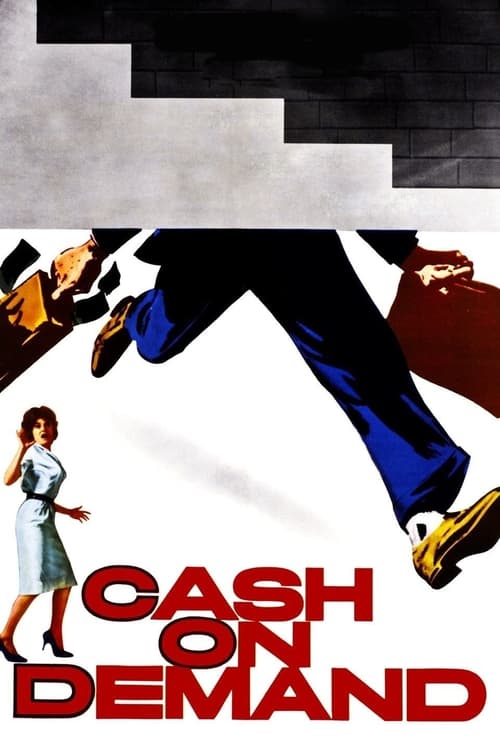
Cash on Demand
1961
No user ratings available yet
Representation score: 1.4 out of 10
Representation Score
Minimal
1961
Director
Francis Searle
Runtime
61 minutes
Average Rating
No ratings yetNew Showbiz Analysis
Freedom to Die is a conventional 1961 crime thriller that prioritizes genre-driven suspense over social exploration. The plot centers on the pursuit of material wealth and a classic protagonist-antagonist dynamic, keeping the focus on individual greed rather than identity politics. The film adheres to the standard cinematic conventions of its era. It utilizes traditional character archetypes, such as the criminal fugitive and the victimized civilian, without attempting to challenge established social hierarchies or institutional structures. Ultimately, the work functions as a standard genre piece. It lacks representation of multiple aspects of diversity, instead relying on the predictable narrative mechanics of mid-century British filmmaking.
Category Breakdown
The film does not include any characters with non-binary gender identities. The story revolves around a male criminal and a female victim.
Gender roles in the film follow mid-century stereotypes, with the male protagonist driving the plot through his actions. The female character, Linda, is portrayed as a passive victim in a damsel-in-distress situation.
The film likely reflects the homogeneous casting practices of 1961 British cinema. There is no indication of ethnic diversity or multicultural casting in the narrative.
The story operates within a traditional moral framework centered on individual greed. It does not challenge Western institutions or explore diverse cultural perspectives.
There is no mention of characters with visible or invisible disabilities. The character descriptions provide no evidence of neurodivergent representation.
Present on Screen
Limited or Absent
Official Synopsis
Paul Maxwell plays Craig Owen, an incarcerated criminal whose cellmate holds the secret to the valuable contents within a safe deposit box. When the cellmate dies, Owen breaks out of jail in search of the stash. Unable to open the box, the fugitive abducts Linda (Felicity Young), the dead man's daughter. Tension mounts as the girl plays for time to prevent her own demise.
1961
1947
1962

1955
1956

1955
1957
1968
No reviews yet. Be the first to share your thoughts on this movie!
Use the rating form above to leave a star rating and optional review.