Find another title
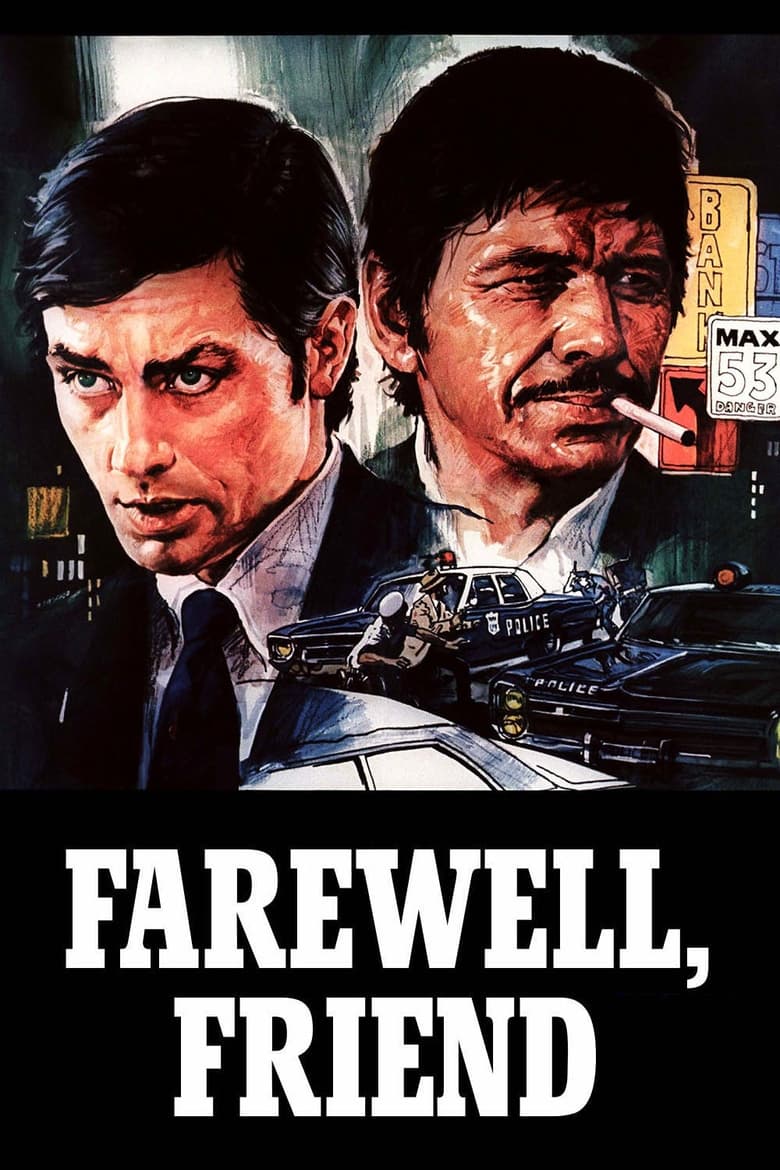
Farewell, Friend
1968
Director
Jean Herman
Runtime
115 minutes
Average Rating
No ratings yetSynopsis
After serving together in the French Foreign Legion, a mercenary and a doctor leave the service and go their separate ways. Later, they are reunited and become involved with a caper involving millions in a high-security safe. The two men become locked in during a holiday weekend as they attempt to crack the safe's combination.
Where to Watch
Diversity & Representation
Overall Score
Limited
Category Breakdown
LGBTQ+ Representation
The film lacks identifiable LGBTQ+ characters or non-cisnormative identities. It operates within conventional heteronormative frameworks typical of 1960s European crime cinema.
Gender Representation
Female characters primarily function as catalysts for the male protagonists' actions. The narrative focuses on the competence and survivalism of its male leads rather than subverting gender hierarchies.
Racial & Ethnic Diversity
The cast is predominantly homogeneous, focusing on friction between French and German identities. It lacks a broader exploration of racial or ethnic intersectionality.
Religious & Cultural Diversity
The film explores moral relativism through mercenaries operating in legal gray areas. This serves as an existentialist character study rather than a critique of Western institutions.
Disability Representation
Characters are defined by physical capability and survival instincts. There is no significant focus on neurodivergence or physical impairment as a narrative driver.
Strengths
- Engages with complex themes of moral relativism and existentialism.
- Provides a gritty, character-driven study of individualist survival.
Areas for Improvement
- Lacks racial and ethnic intersectionality within its predominantly homogeneous cast.
- Relies on traditional gender roles and heteronormative frameworks.
- Provides minimal representation for LGBTQ+ identities or characters with disabilities.
AI Analysis
Jean Herman’s thriller is a product of its era, prioritizing individualist survival and moral ambiguity over intersectional representation. The story centers on traditional masculine archetypes and historical European tensions, which limits its demographic breadth. The film functions as a standard crime narrative, focusing on the friction between specific nationalities rather than a diverse array of ethnic or racial backgrounds. It adheres to the social and gender norms of 1960s European cinema. Ultimately, the work lacks the intentionality required to disrupt established social hierarchies, making it a conventional genre piece rather than a socially subversive one.
Rate this Movie
Reviews
No reviews yet. Be the first to share your thoughts on this movie!
Use the rating form above to leave a star rating and optional review.