
Ateliers de La Ciotat
1896
No user ratings available yet
Representation score: 0.2 out of 10
![Workers Leaving the Lumière Factory, [III]](https://image.tmdb.org/t/p/w500/8OSetr1MdBXm7mCy9vTlVMW4zDE.jpg)
Representation Score
Minimal
1896
Director
Louis Lumière
Runtime
1 minutes
Average Rating
No ratings yetNew Showbiz Analysis
This film functions as a foundational historical document rather than a constructed narrative. It captures the socio-demographic realities of 1896 France through a literal 'actualité' lens. The low diversity score reflects the film's role as a mechanical recording of a physical event. It does not seek to challenge or disrupt traditional social hierarchies. Ultimately, the work lacks intentional characters who reflect more than one aspect of diversity, focusing instead on documenting a specific historical moment and location.
Category Breakdown
The film does not include any evidence of LGBTQ identities or non-cisgender expressions. It focuses on the collective movement of workers rather than individual identity.
Both men and women are shown in the workforce, reflecting the 19th-century industrial setting. However, the subjects appear as a collective group without individual ability to act or subversion of gender hierarchies.
The footage shows a predominantly white European working class. It serves as a literal recording of a specific French industrial site during this time period.
The film presents a secular, industrial reality of the working class. While it does not explicitly deconstruct Western institutions, it provides a foundational text for studying class dynamics.
The brief, observational nature of the footage does not provide any evidence of individuals with physical or neurodivergent disabilities.
Present on Screen
Limited or Absent
Official Synopsis
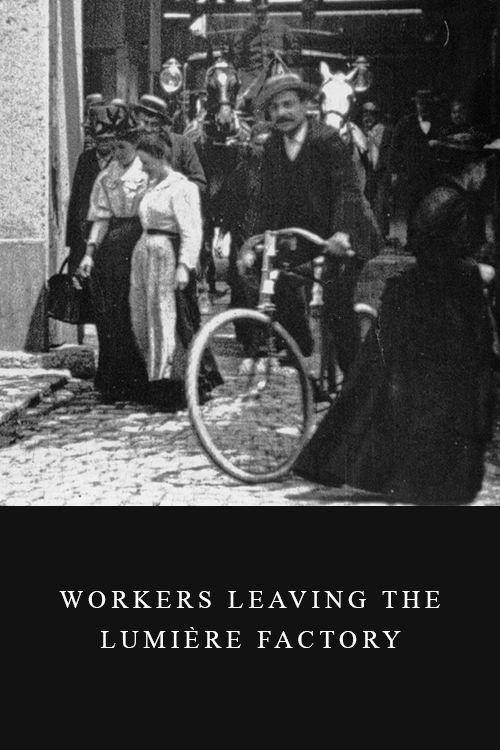
Workers are leaving the Lumière factory.
1896
1896
1896
1895

1896
1896

1896

1896
No reviews yet. Be the first to share your thoughts on this movie!
Use the rating form above to leave a star rating and optional review.