Carpenters
1896
No user ratings available yet
Representation score: 1.1 out of 10
Representation Score
Minimal
1896
Not RatedDirector
Louis Lumière
Runtime
1 minutes
Average Rating
No ratings yetNew Showbiz Analysis
Louis Lumière’s work serves as a historical artifact of industrial labor rather than a vehicle for storytelling that reflects multiple aspects of identity. The film focuses on the 'actuality' of real-world movement and the mechanical processes of production and destruction. Because the film documents a specific moment in late 19th-century European industry, it lacks the narrative complexity required for higher diversity metrics. The subjects are defined by their physical utility within a rigid industrial framework. Ultimately, the film reflects the socio-economic constraints of its time, presenting a homogeneous workforce and traditional gender roles without intentional subversion.
Category Breakdown
The film is a brief documentary study of manual labor. It contains no evidence of LGBTQ+ characters or non-straight identities.
The narrative centers entirely on a male-dominated labor force. The depiction reinforces 19th-century industrial hierarchies with no visible role for women.
The film captures a specific moment in European industrial history. The workforce appears homogeneous, consistent with the era's socio-economic constraints.
The work documents the physical realities of early capitalism and industrialization. It maintains a purely observational, secular documentary style.
There is no evidence of characters with visible or invisible disabilities. Workers are shown through the lens of heavy manual labor capability.
Present on Screen
Limited or Absent
Official Synopsis
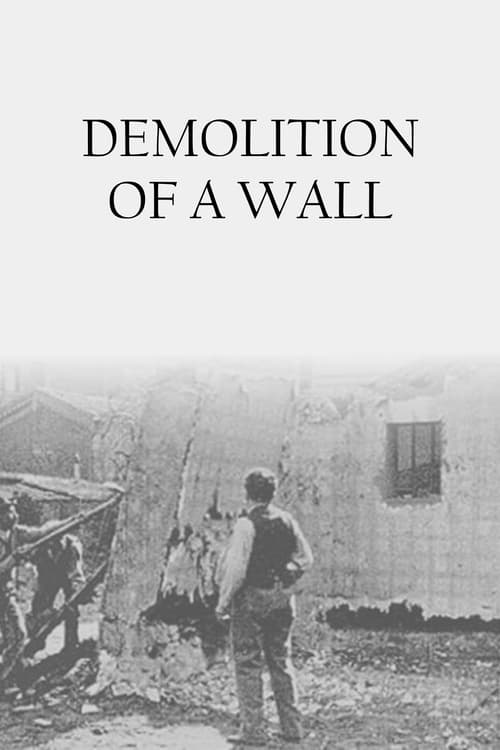
“The scene depicts the collapse of a section of wall in a factory.” Three workers demolish a wall in the presence of Auguste Lumière.
1896

1898
![Movie poster for Sortie d'usine, [III]](https://image.tmdb.org/t/p/w500/8OSetr1MdBXm7mCy9vTlVMW4zDE.jpg)
1896

1896

1896

1896
1896
1897
No reviews yet. Be the first to share your thoughts on this movie!
Use the rating form above to leave a star rating and optional review.