Maroa
2005
No user ratings available yet
Representation score: 8.5 out of 10
Representation Score
Good
1996
Director
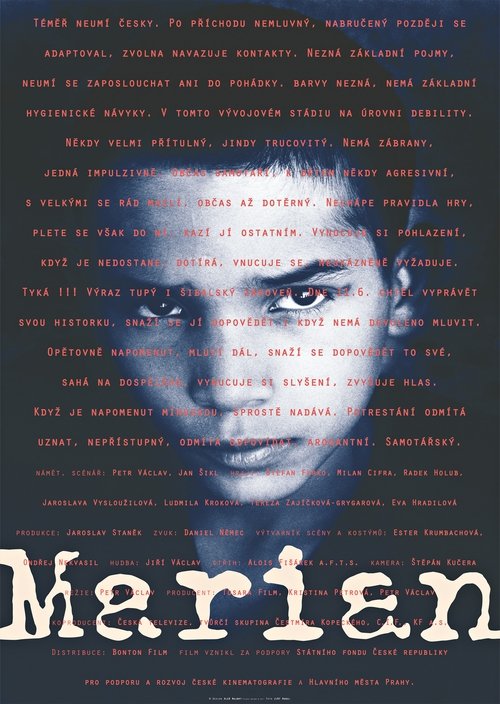
Petr Václav
Runtime
104 minutes
Average Rating
No ratings yetNew Showbiz Analysis
Marian is a gritty, realistic drama that centers on the Romani experience within a critique of systemic oppression. By featuring a Romani protagonist, the film challenges homogeneous historical narratives and highlights the ability to act of underrepresented communities. While the film excels in racial and cultural representation, it falls short in other areas. It lacks explicit LGBTQ+ characters and relies on traditional gender roles, which limits a more modern exploration of identity. Ultimately, the film's strength lies in its refusal to romanticize the social order. It uses the protagonist's involvement in crime to highlight the cyclical nature of institutional trauma and state failure.
Category Breakdown
The film does not include explicit LGBTQ+ characters or explore non-straight relationships. The central romance follows a conventional storyline without any queer-coded subtext.
The film features strong female authority figures but relies on traditional gender roles such as nurturers and punishers. It does not challenge these established gender hierarchies.
The film focuses on a Romani protagonist, offering deep insights into the Czech Gypsy experience. It highlights how language barriers and ethnic exclusion contribute to institutionalization.
The story criticizes state-controlled social structures as dehumanizing. It portrays parenthood as a source of trauma rather than a positive foundation, challenging traditional family values.
The protagonist is labeled a 'problem child' due to his difficulty in fitting in. This indicates a critique of how society punishes those who do not conform to communication norms.
Present on Screen
Limited or Absent
Official Synopsis
Told via flashback, this raw, emotional drama chronicles the events that led a 22-year-old Czech Gypsy to prison. Marian was born to an alcoholic father and a terrible mother. As a result he is sent to a government orphanage where he is labelled a problem child for his inability to speak Czech. Life in the orphanage is devoid of love and offers only minimal physical comforts. Sometimes life there is brutal. His one bright spot was the time he first spent with a kindly and encouraging teacher who inspired in him hope for a better future. One day something goes wrong and the teacher is forced to punish Marian who retaliates by stabbing her. Marian is a teen by the time he is released from a juvenile reformatory. He falls in love for the first time, but because it is a foreign emotion, he doesn't know how to deal with it. By this time, the cruelty that has marked his life in institutions seems to have fated him to be a criminal and for Marian there can be no turning back.
2005
1962
1990
1994

2011
2000
1977
1938
No reviews yet. Be the first to share your thoughts on this movie!
Use the rating form above to leave a star rating and optional review.