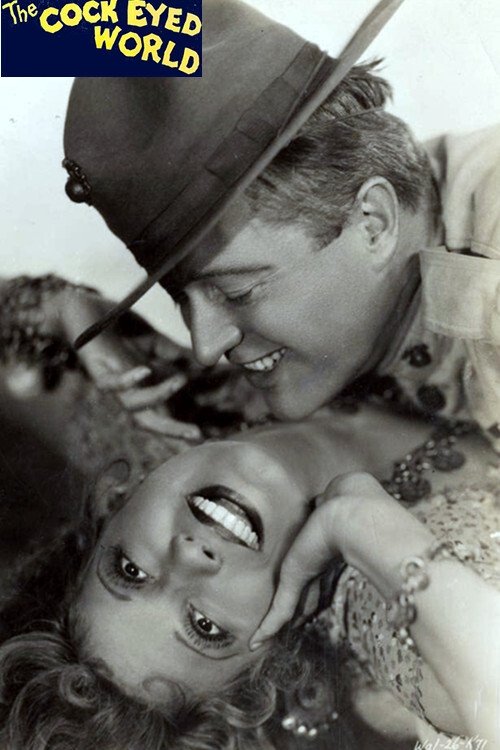
The Cock-Eyed World
1929
No user ratings available yet
Representation score: 1.6 out of 10

Representation Score
Minimal
1929
PassedDirector
Luther Reed
Runtime
103 minutes
Average Rating
No ratings yetNew Showbiz Analysis
Hit the Deck is a conventional musical comedy from the early sound era that prioritizes escapist entertainment over sociopolitical critique. The narrative follows standard romantic clichés, centering on a sailor's pursuit of a cafe owner. The film operates within the established cinematic norms of 1929, focusing on traditional romantic structures rather than disrupting social hierarchies. It appears to be a product of its time, emphasizing genre-specific entertainment. Due to the lack of specific character details, the work is characterized by its adherence to the era's typical casting and thematic standards.
Category Breakdown
The film centers on a heterosexual relationship between a sailor and a cafe owner. It does not include any characters with non-binary gender identities or stories that challenge the assumption that everyone is straight.
The story follows a traditional romantic storyline common for the era. While the female cafe owner runs a business, the plot relies on established gender roles and pursuit-based structures.
The film likely reflects the homogeneous casting practices of late 1920s Hollywood. There is no indication of diverse casting or non-white majority representation in the narrative.
As a standard musical comedy, the film emphasizes lightheartedness and conventional morality. It adheres to the social norms of the period without exploring secular or anti-Western themes.
There is no information available regarding the inclusion of characters with physical or neurodivergent disabilities.
Present on Screen
Limited or Absent
Official Synopsis
A sailor finds himself the object of a cafe owner's affections.
1929

1931
1934

1935
1929

1928

1937
1945
No reviews yet. Be the first to share your thoughts on this movie!
Use the rating form above to leave a star rating and optional review.