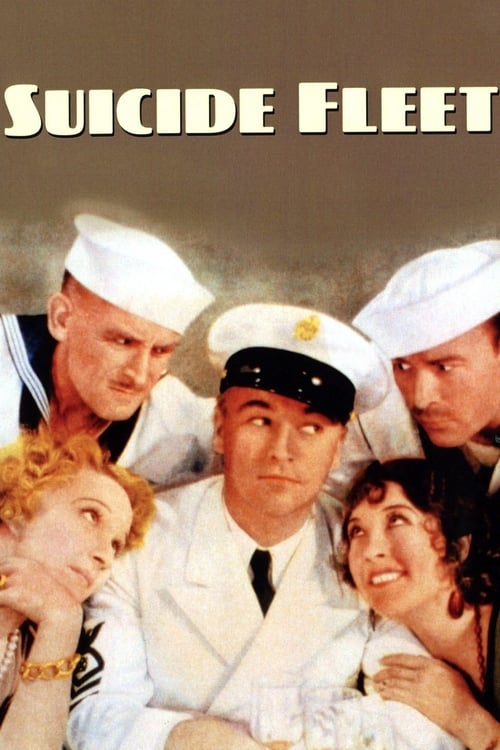
Suicide Fleet
1931
No user ratings available yet
Representation score: 1.4 out of 10
Representation Score
Minimal
1926
PassedDirector
A. Edward Sutherland
Runtime
66 minutes
Average Rating
No ratings yetNew Showbiz Analysis
This 1926 comedy reflects its historical context, emphasizing physical slapstick and situational chaos rather than social commentary. The narrative structure reinforces the institutional norms of the mid-1920s, focusing on Western military heroism and traditional social roles. While Madelyn Phillips demonstrates professional competence, the film does not challenge systemic patriarchal structures. Overall, the film presents a homogeneous view of society aligned with the era's mainstream studio standards.
Category Breakdown
The film focuses on traditional male camaraderie and heterosexual relationships. It does not include any non-cisgender identities or challenge the assumption that everyone is straight.
Madelyn Phillips plays a significant role as a competent U.S. Secret Service operative. However, the main humor comes from male interactions and slapstick comedy.
The cast appears uniform, reflecting the era's mainstream production standards. The setting emphasizes Western military institutions without showing diverse racial backgrounds.
The narrative upholds traditional Western military and institutional norms, following a standard patriotic storyline common to the 1920s.
The film does not feature any characters with visible or invisible disabilities used as plot devices or given specific ability to act.
Present on Screen
Limited or Absent
Official Synopsis
"Stinky" Smith makes off with the prize money when his buddy, "Knockout" Hansen loses a fight with Percival "Sailor" Scruggs. Hansen pursues him him a U.S. Navt recruiting office, and, the next thing they know, both are in the Navy and aboard an overseas transport ship. Madelyn Phillips is on board and Scruggs is the the ship's Master-of-Arms. They overhear a mysterious conversation between Madelyn and the ship's radio officer. Later, Madelun induces the pair to take her off the ship and into a row boat. She disappears and they are picked up by a French ship, which sinks a German U-Boat. When the war ends they learn that Madelyn was an operative of the U.S. Secret Service.
1931
1926

1921

1951
1943
1941
1939
1937
No reviews yet. Be the first to share your thoughts on this movie!
Use the rating form above to leave a star rating and optional review.