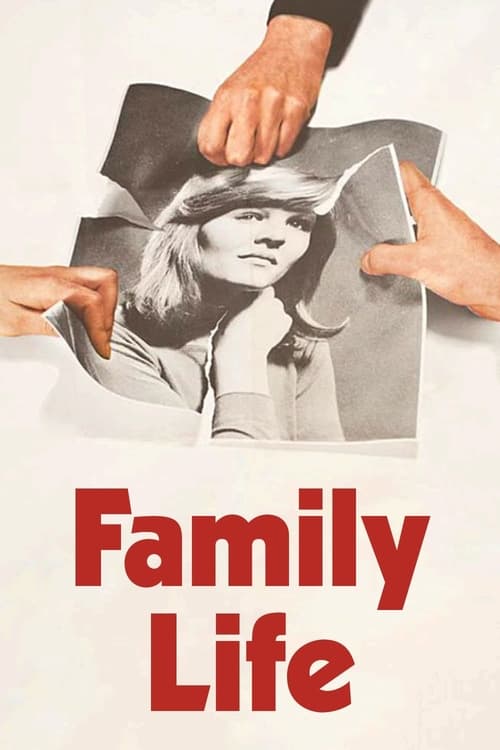
Family Life
1971
No user ratings available yet
Representation score: 6.0 out of 10

Representation Score
Fair
1971
Director
Krzysztof Zanussi
Runtime
88 minutes
Average Rating
No ratings yetNew Showbiz Analysis
Krzysztof Zanussi’s *Family Life* is a sophisticated character study that rejects traditional moral absolutes. It succeeds by using the domestic sphere to deconstruct the idea of the family as a stable institution. The film's strength lies in its intellectual subversion of social norms and its focus on moral ambiguity. However, the work lacks multi-layered breadth. The narrative remains narrow, focusing on a homogeneous cast and a strictly straight-centered framework, offering little representation for racial or LGBTQ+ identities.
Category Breakdown
The film adheres to a traditional framework that assumes everyone is straight and cisgender. There are no representations of LGBTQ+ identities or narratives that challenge the assumption that everyone is straight or cisgender.
Female characters, including the sister and aunt, avoid submissive roles. They are portrayed as complex, abrasive figures who challenge the protagonist's rationalist perspective.
The film features a homogeneous cast reflecting its 1970s Polish setting. It does not explore racial or ethnic diversity.
Zanussi critiques the sanctity of the family, depicting it as a source of pathology. The narrative emphasizes existentialism and subjective morality over religious or state dogmas.
The gravely ill father serves mainly as a plot device for the protagonist's crisis. The film does not explore disability as an independent identity.
Present on Screen
Limited or Absent
Official Synopsis
A young industrial designer named Wit reluctantly returns to his family home to look after his gravely ill father. Upon entering the dark confines of a house he has not visited in six years, Wit once again finds himself exposed to the idiosyncratic pathologies of his father, sister, and aunt.
1971
2016
1985

1961
2012

1999

2018
2007
No reviews yet. Be the first to share your thoughts on this movie!
Use the rating form above to leave a star rating and optional review.