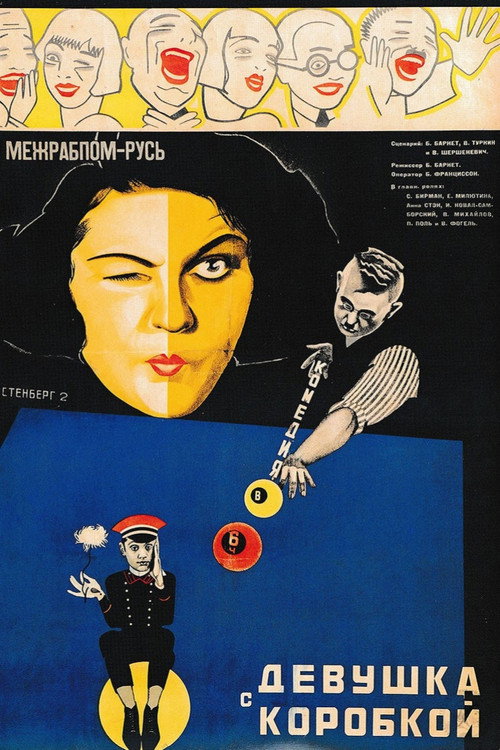
The Girl with the Hat Box
1927
No user ratings available yet
Representation score: 3.0 out of 10
Representation Score
Fair
1925
Director
Yakov Protazanov
Runtime
65 minutes
Average Rating
No ratings yetNew Showbiz Analysis
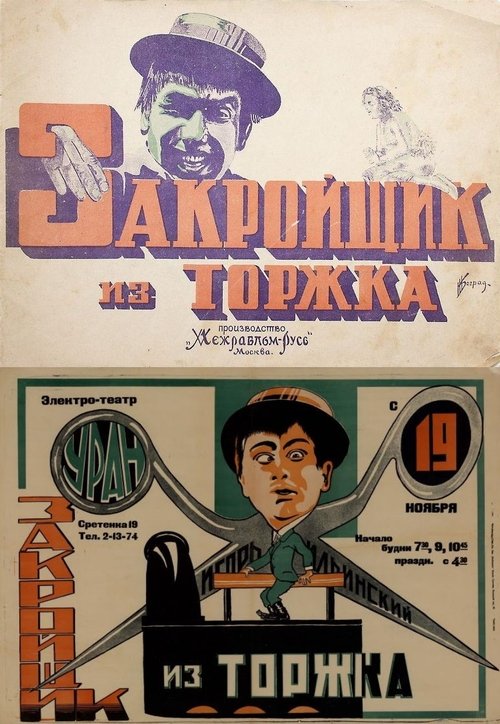
This film is a product of early Soviet cinema, crafted to align narrative structures with the socio-economic goals of the time. It prioritizes ideological shifts and class struggle over modern markers like race or LGBTQ+ identity. While it lacks ethnic and queer diversity, it excels in cultural critique by dismantling pre-revolutionary social hierarchies. The story serves as a critique of the old order, emphasizing a collective social reality. Ultimately, the film's diversity is rooted in its critique of capitalism and its portrayal of women navigating a changing economic landscape.
Category Breakdown
The film depicts a traditional romance between Petya and Katya. There is no indication of queer subtext or non-straight relationships in the story.
Female characters play significant roles in the broader social and economic changes. The tension between Shirinkina and Katya highlights women's ability to act during a time of social transformation.
The narrative centers on class dynamics and the shift from provincial life to Soviet reality. It does not feature significant racial or ethnic diversity among its characters.
The film criticizes bourgeois institutions and supports a new economic system. It uses the transition from provincial life to Soviet reality to break down old class structures.
There are no characters with visible or central disabilities in the film.
Present on Screen
Limited or Absent
Official Synopsis
A 1925 Soviet comedy sponsored by the Soviet Finance Ministry, with a plot promoting the new economy. A small-town tailor, Petya Petelkin (Ilyinsky), bought a lottery ticket and handed it to his landlord, widow Shirinkina (Deykun) who wants to marry him. Petya is a hard-working tailor trying to start his own business. He is also in love with Katya (Maretskaya), whom he wants to marry. He has to survive a cascade of funny situations in the unstable Soviet reality, before his romance with Katya comes to a happy ending.
1927
1962
1926

1928
1918
1928
1939
1935
No reviews yet. Be the first to share your thoughts on this movie!
Use the rating form above to leave a star rating and optional review.