
Pressure
1976
No user ratings available yet
Representation score: 8.9 out of 10
Representation Score
Limited
1961
Director
Roy Ward Baker
Runtime
93 minutes
Average Rating
No ratings yetNew Showbiz Analysis
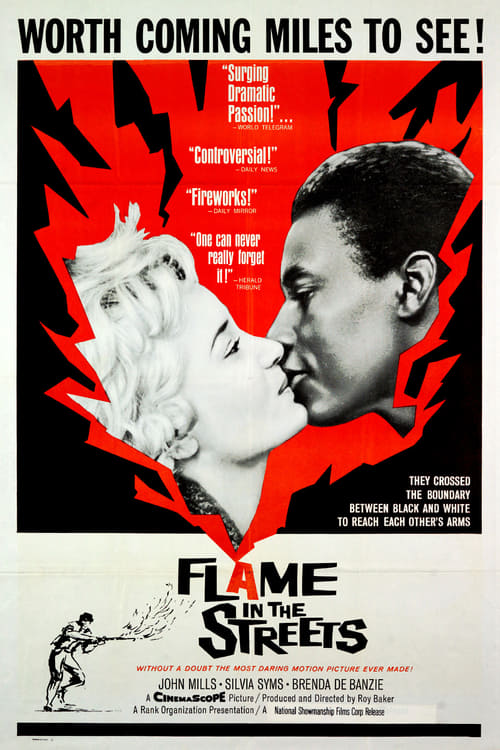
Flame in the Streets offers a sociological perspective on the British New Wave, emphasizing class hierarchies and post-colonial tensions. It stands out by focusing on an interracial romance between a white woman and a Jamaican man, challenging the era's typical Anglo-centric norms. However, the film adheres to the social norms of 1961. It lacks any representation of LGBTQ+ identities or disabilities, and its portrayal of gender aligns with period-typical roles without subversion. Ultimately, the film's strength lies in its exploration of race and class issues. By framing social unrest as a reaction to economic pressures rather than simple criminality, it provides a progressive critique of institutional stability.
Category Breakdown
The film focuses solely on heterosexual romantic tensions and traditional family structures. There are no queer narratives or non-straight identities present.
Characters operate within the rigid social structures of the early 1960s. Women's frustrations with social expectations are evident, but the film does not challenge traditional gender roles.
The story centers on a cross-cultural romance between a white working-class woman and a Jamaican man. This dynamic introduces tensions related to historical colonization into the domestic drama.
The narrative explores anti-capitalist sentiments and the struggle of the working class. It portrays civil unrest as a response to systemic socioeconomic injustice.
There is no focus on physical, neurodivergent, or mental health disabilities in this work.
Present on Screen
Limited or Absent
Official Synopsis
Domestic difficulties develop in a working-class family when their daughter falls in love with a Jamaican man.
1976

1961
1956

1966
1964

1950
1962

1965
No reviews yet. Be the first to share your thoughts on this movie!
Use the rating form above to leave a star rating and optional review.