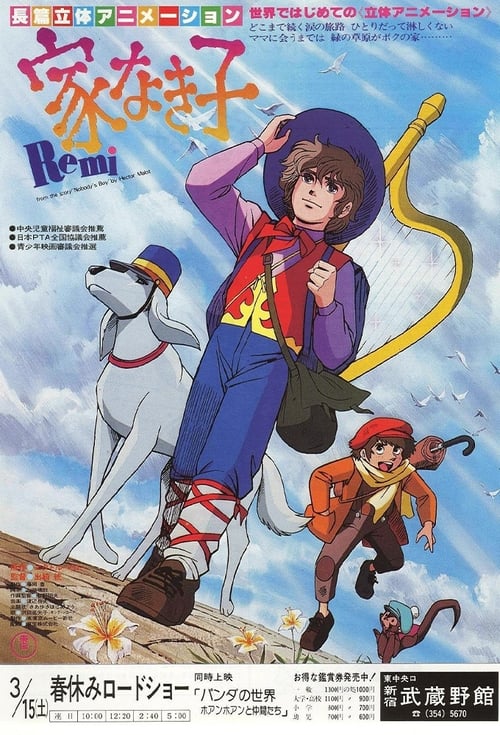
Nobody's Boy: Remi (Movie)
1980
No user ratings available yet
Representation score: 3.2 out of 10

Representation Score
Excellent
1972
Director
Hayao Miyazaki
Runtime
5 minutes
Average Rating
No ratings yetNew Showbiz Analysis
Yuki's Sun functions as a character study centered on an orphaned child navigating the complexities of adoption. By focusing on Yuki's transition into a new social unit, the film explores themes of ability to act and the restructuring of domestic identity. The work aligns with progressive storytelling patterns by centering a underrepresented protagonist. However, the narrative is constrained by the historical and cultural context of 1972 Japanese animation. Ultimately, the film's strength lies in its potential to challenge traditional social hierarchies through the lens of a child's internal journey.
Category Breakdown
The film does not provide explicit details about gender identity or sexual orientation. Adoption themes may touch on non-traditional family structures, but there is no specific evidence of LGBTQ+ representation.
The story centers on Yuki, a ten-year-old girl, emphasizing her role and placing a young girl's perspective at the heart of the drama.
Reflecting its 1972 Japanese production context, the work appears homogeneous, with no indication of multicultural casting.
The narrative explores kinship by focusing on an orphan's adoption. It critiques the nuclear family model by presenting a reconstructed version of domestic stability.
There is no information available regarding physical disabilities or neurodivergence. The score remains neutral due to a lack of specific character details.
Present on Screen
Limited or Absent
Official Synopsis
TV pilot based on an original manga by Tetsuya Chiba, about a 10-year old girl named Yuki. An orphan who's being adopted by a family.
1980
1992
1991
1985
1979

2021
1987
2013
No reviews yet. Be the first to share your thoughts on this movie!
Use the rating form above to leave a star rating and optional review.