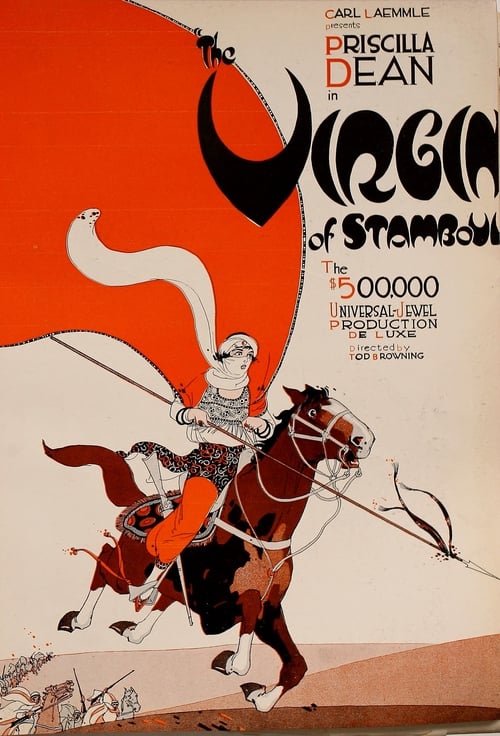
The Virgin of Stamboul
1920
No user ratings available yet
Diversity score: 2.6 out of 10

1926
Director
Tod Browning
Runtime
46 minutes
Average Rating
No ratings yetSynopsis
Joe, a former sea captain whose wife died during the birth of their child at sea, is now a pockmarked, disreputable divekeeper in Singapore where he indulges in shady operations with Herrick, known as The Admiral. They ship for Mandalay, where Joe's daughter lives with a priest, Father James, and tends a curio shop, unaware that her father regularly sends money to Father James for her support. Although his daughter clearly finds him abhorrent, Joe determines to take her away until he learns that The Admiral has fallen in love with her and plans to marry her. He persuades Father James (actually his brother) not to perform the ceremony, and The Admiral is shanghaied by Joe's men. The girl, suspecting Joe, goes to his brothel in Singapore and is about to be assaulted by Charlie, a lecherous Chinaman, when Joe intervenes and is stabbed. The Admiral comes to her rescue and escapes with her on a boat.
Overall Score
Limited
Category Breakdown
LGBTQ+ Representation
The film contains no depictions of non-heteronormative identities or queer subtext. Conflicts are driven entirely by traditional romantic interests and familial obligations.
Gender Representation
Gender roles follow traditional hierarchies. While the female lead shows agency by investigating her father, she ultimately functions as a figure requiring rescue by the Admiral.
Racial & Ethnic Diversity
The setting utilizes colonial tropes common to the era. Local characters are depicted through racial caricatures that reinforce existing colonial hierarchies rather than providing depth.
Religious & Cultural Diversity
The story is rooted in Western colonial frameworks, prioritizing institutions like the priesthood and the family unit. It functions as a standard adventure drama within this context.
Disability Representation
There is no representation of physical or neurodivergent disabilities. The protagonist's pockmarked appearance serves as a visual shorthand for moral ambiguity rather than exploring disability.
Strengths
Areas for Improvement
AI Analysis
The film operates as a traditional colonial melodrama, strictly adhering to the social and racial hierarchies of the 1920s. It prioritizes a plot of familial redemption and romantic rescue over any meaningful exploration of identity. Characters are largely archetypal, serving to advance the narrative within a Western-centric framework. The production reinforces established social norms rather than attempting to subvert them through intersectional complexity.
1920
1934

1920

1920
1918
1920
1927
1932
1918
1934
1923
1924
No reviews yet. Be the first to share your thoughts on this movie!
Use the rating form above to leave a star rating and optional review.