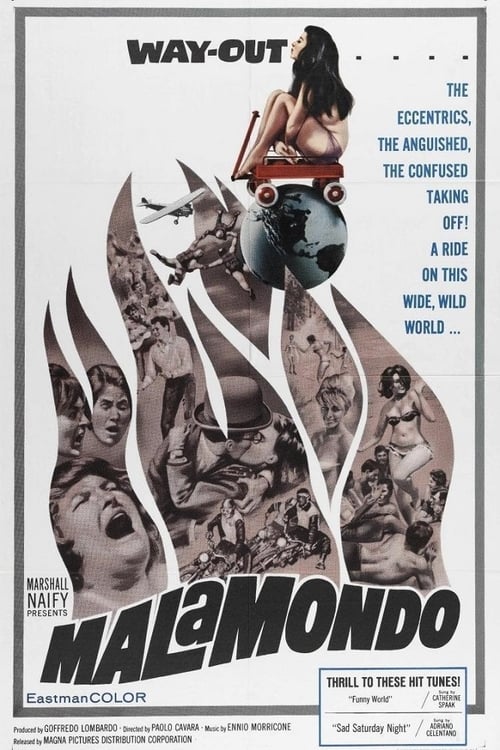
Malamondo
1964
No user ratings available yet
Representation score: 4.7 out of 10
Representation Score
Fair
1963
Director
Gianni Proia
Runtime
100 minutes
Average Rating
No ratings yetNew Showbiz Analysis
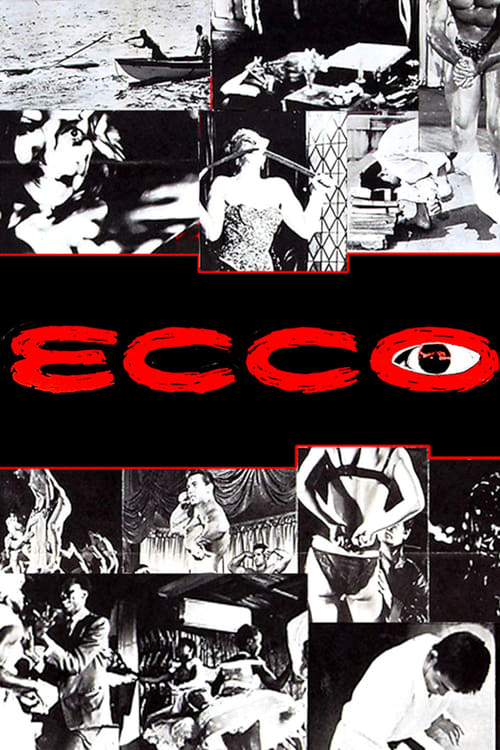
Ecco serves as a provocative cinematic artifact that challenges the social boundaries of the early 1960s. By documenting the unconventional and the underrepresented, it disrupts the era's typical assumptions about society. However, the film's narrative structure relies heavily on the spectacle of the 'other.' Instead of providing meaningful character development or ability to act, the subjects are often presented as curiosities or grotesque anomalies to be observed. Ultimately, the work occupies a transitional space. It provides visibility to non-traditional identities and behaviors, yet it does so through a voyeuristic framework that prioritizes shock over deeper understanding.
Category Breakdown
The film includes footage of lesbians, challenging the censorship standards of 1963. However, it presents these identities as part of a 'grotesque' tour, suggesting a voyeuristic rather than empathetic perspective.
Female subjects, such as strippers, are shown as objects of spectacle. They lack individual ability to act and are primarily presented through a lens of social oddity.
There is insufficient evidence to evaluate the racial composition of the cast or the presence of non-Anglo-Saxon centricity within this production.
The documentary presents unconventional behaviors without religious condemnation, disrupting traditional Western social norms by focusing on the fringes of human existence.
The film features extreme physical behaviors, such as needle piercing, which are framed as grotesque spectacles. These behaviors are used for shock value rather than nuanced representation.
Present on Screen
Limited or Absent
Official Synopsis
A documentary highlighting some of the oddest, strangest and more grotesque examples of human behavior. Included are a tour of the Grand Guignol theater in Paris, a man who sticks long needles through his body, reindeer being castrated, and footage of lesbians and strippers.
1964
2019
1963
1984

1964
1966
1963
1969
No reviews yet. Be the first to share your thoughts on this movie!
Use the rating form above to leave a star rating and optional review.