
Riptide
1934
No user ratings available yet
Representation score: 1.3 out of 10
Representation Score
Minimal
1930
PassedDirector
John M. Stahl
Runtime
102 minutes
Average Rating
No ratings yetNew Showbiz Analysis
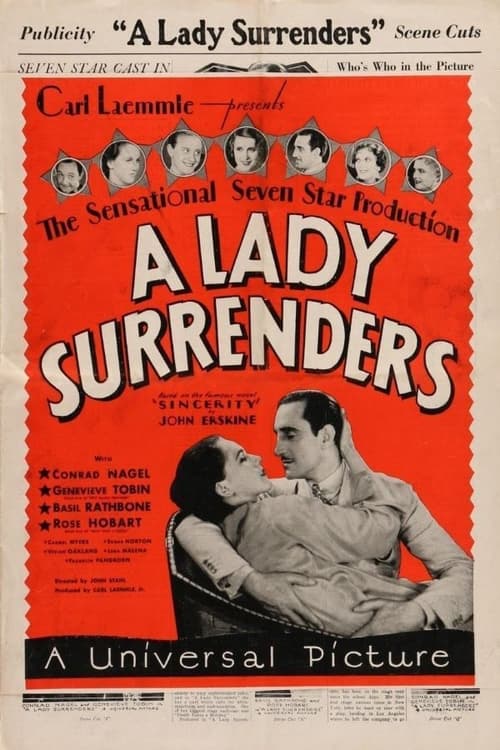
A Lady Surrenders is a classic early sound-era melodrama that reflects the social hierarchies of the 1930s. While the film centers on the emotional life of its female protagonist, the plot remains confined by patriarchal structures and traditional marital conflicts. The production lacks depth, presenting a narrow, homogeneous view of high society and reinforcing the era's standard cinematic norms without challenging them. It focuses on the emotional repercussions of wealth and status within a white, aristocratic context.
Category Breakdown
The film follows traditional romantic structures and does not depict any non-straight or non-cisgender identities or same-sex relationships.
The story focuses on a female protagonist's emotional journey, but her role remains reactive to the actions of the male industrialist.
The setting portrays a homogeneous, high-society environment with no evidence of non-white or diverse ethnic backgrounds.
The narrative highlights Western social values and upper-class customs, exploring emotional consequences within a conventional capitalist framework.
There is no depiction of characters with visible or invisible disabilities, nor are such characters used as plot devices.
Present on Screen
Limited or Absent
Official Synopsis
A wealthy industrialist's wife gets into a big argument with him; to cool off, she goes on an ocean trip. He thinks she's left him for good, so he marries another woman. When his first wife returns, complications ensue.
1934

1952

1930

1933

1931

1923
1933

1929
No reviews yet. Be the first to share your thoughts on this movie!
Use the rating form above to leave a star rating and optional review.