
Reus
2011
No user ratings available yet
Representation score: 2.4 out of 10
Representation Score
Fair
2006
Director
Mireia Ros
Average Rating
No ratings yetNew Showbiz Analysis
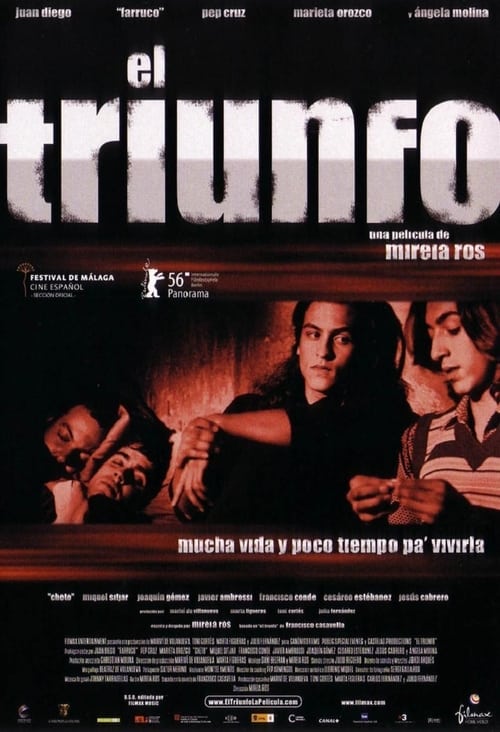
El Triunfo is a gritty urban drama centered on the world of rumba in 1980s Barcelona. The film offers a vibrant look at localized subcultures and the struggle for artistic triumph amidst street violence. However, the film's social landscape is heavily skewed toward traditional masculine power structures, limiting the breadth of its social representation. While it successfully portrays underrepresented urban life and complex neighborhood dynamics, it lacks visibility for LGBTQ+ identities and provides limited ability to act for female characters.
Category Breakdown
The film does not explicitly include LGBTQ+ characters or explore non-straight relationships. The story focuses on traditional masculine dynamics and neighborhood power structures.
The narrative emphasizes male-dominated hierarchies and street control. While Chata is central to the mystery, her role is primarily defined by her relationships with men.
The film highlights Mediterranean and immigrant-influenced subcultures through the lens of rumba music. This cultural focus disrupts standard dramatic clichés and provides a meaningful perspective on localized subcultures.
The story explores a community of survivors operating outside traditional institutional oversight. It presents a nuanced moral framework through the tension between vengeance and artistic ambition.
The film does not include characters navigating physical, neurodivergent, or mental health conditions.
Present on Screen
Limited or Absent
Official Synopsis
Barcelona, 1980s: in a tough urban neighbourhood inhabited by survivors and ruled by ex-legionnaires Gandhi, Fontán and Andrade - who are fighting a war for control of the streets - Nen and his friends Palito, Topo and Tostao dream of making it big in the world of rumba. But Nen discovers why his father, El Guacho - of whom all Nen has left is the memory of his brilliance as a rumba singer - disappeared many years earlier. He learns how the relationship between his mother, Chata, and Ghandi, leader of the neighbourhood, was connected to his father's disappearance, and so Nen is forced to balance his own desire for vengeance with his longing to triumph.
2011
2007
2010
2000
2000

2010

2005
2005
No reviews yet. Be the first to share your thoughts on this movie!
Use the rating form above to leave a star rating and optional review.