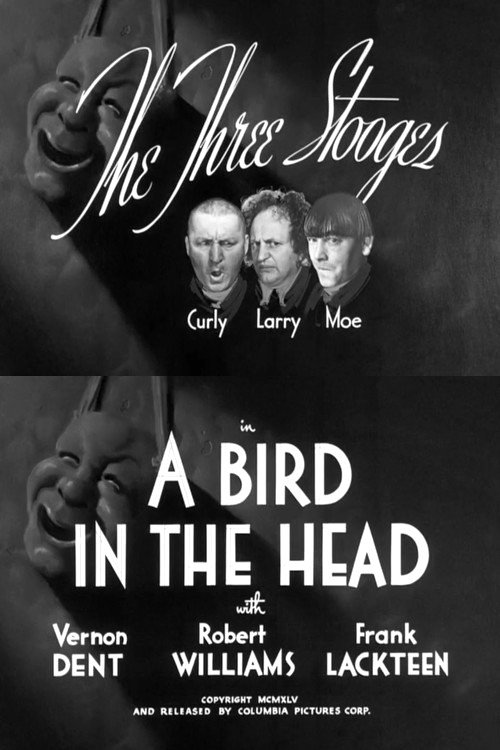
A Bird in the Head
1946
No user ratings available yet
Representation score: 3.1 out of 10

Representation Score
Limited
1924
PassedDirector
Henry Lehrman
Runtime
60 minutes
Average Rating
No ratings yetNew Showbiz Analysis
On Time is a product of the silent era's slapstick tradition, prioritizing physical humor over complex social commentary. The narrative is driven by a singular, absurd premise involving a scientific experiment that lacks depth in terms of diverse identities. The film adheres to the homogeneous casting and rigid social hierarchies prevalent in 1924. It focuses on biological absurdity rather than exploring diverse identities or systemic critiques. Ultimately, the work functions as a period-specific comedy where character identity is secondary to the central comedic conceit of the brain transplant.
Category Breakdown
The film does not depict any LGBTQ+ identities or same-sex relationships. It stays within the conventional social structures typical of 1924 slapstick.
The story centers around a male scientist and a gorilla, suggesting a male-driven plot structure. Female characters seem to play secondary or decorative roles.
There is no indication of a diverse cast beyond a likely Anglo-Saxon majority. The focus remains narrow, centered on a specific scientific cliché.
The story uses the mad scientist cliché to explore biological absurdity. It does not engage in any critique of religion, capitalism, or Western institutions.
While the brain transplant theme touches on cognitive identity, it likely serves as a tool for farce. There is no evidence of nuanced portrayal or a significant role in driving the story.
Present on Screen
Limited or Absent
Official Synopsis
A scientist attempts to transplant a gorilla's brain into a man.
1946
1988
1944
1926

1934
1973
1953

1952
No reviews yet. Be the first to share your thoughts on this movie!
Use the rating form above to leave a star rating and optional review.