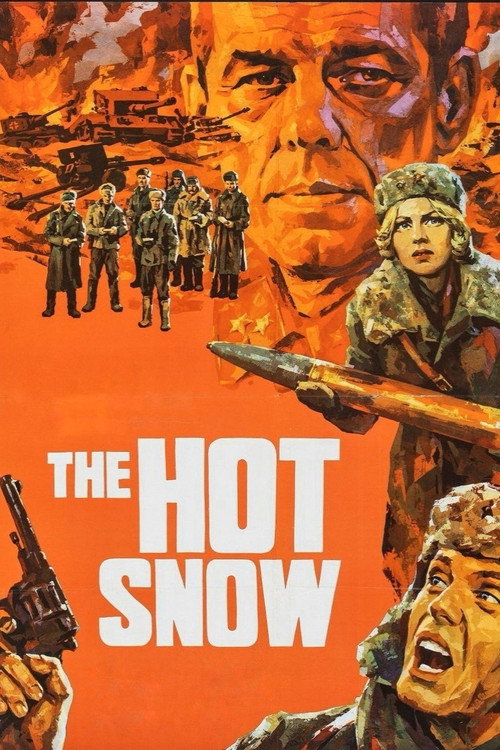
The Hot Snow
1972
No user ratings available yet
Representation score: 2.8 out of 10

Representation Score
Fair
2019
Not RatedDirector
Fyodor Popov
Runtime
140 minutes
Average Rating
No ratings yetNew Showbiz Analysis
Convoy 48: The War Train functions as a traditional historical drama set during the Siege of Leningrad. It succeeds in challenging traditional depictions of female passivity by placing a young woman in a position of significant logistical and technical importance during wartime. However, the film remains anchored in the conventional social and institutional structures of the 1941-1942 era. The narrative focuses on state survival and collective duty, which limits broader social representation. Ultimately, the film provides a focused, period-accurate depiction of survival that prioritizes historical authenticity over diverse social perspectives.
Category Breakdown
The film does not include explicit LGBTQ+ characters or stories that challenge the assumption that everyone is straight or cisgender. Instead, it focuses on the communal struggle for survival during the blockade, reflecting a typical approach in traditional historical war dramas.
The narrative disrupts traditional gender roles by centering on Masha Yablochkina. Rather than a passive role, she acts as a key player in ensuring survival within a high-stakes, male-dominated military-industrial environment.
Set during the Siege of Leningrad, the film reflects a specific demographic context. The focus remains on the localized Soviet experience and the historical realities of the Eastern Front.
Thematic elements center on collective resilience and duty to the nation. The narrative emphasizes the necessity of military logistics and state preservation to ensure the survival of the besieged population.
While the siege context implies widespread physical hardship and trauma, no specific characters with visible or invisible disabilities are identified as having real power in the narrative.
Present on Screen
Limited or Absent
Official Synopsis
Yesterday's Leningrad schoolgirl Masha Yablochkina, after a fierce blockade winter of 1941-1942, comes to the railway courses hoping to survive and gain strength. From there, the girl is sent to the construction of the Shlisselburg highway, which connects the city with the mainland and is in direct sight of German artillery. So the heroine gets into the 48th locomotive column of the special reserve NKPS, which, at the cost of the deadly risk, will have to deliver 75% of all cargo and military equipment to Leningrad.
1972

2023

1989
1959
2009

1965

1974
2006
No reviews yet. Be the first to share your thoughts on this movie!
Use the rating form above to leave a star rating and optional review.