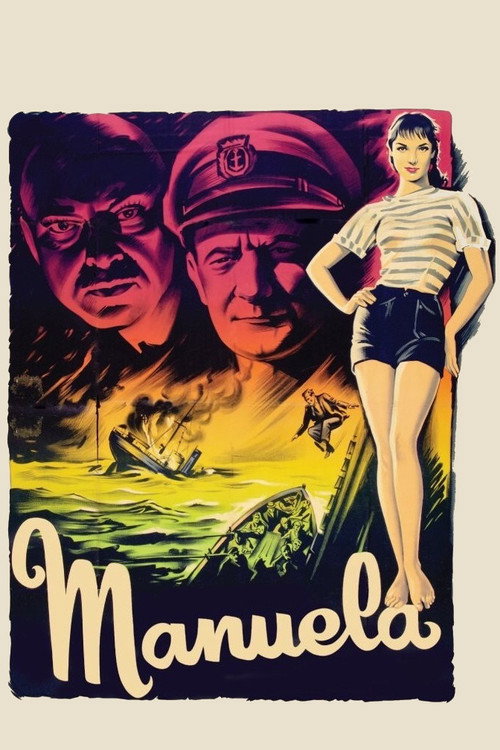
Manuela
1957
No user ratings available yet
Representation score: 2.7 out of 10
Representation Score
Fair
1950
Director
Carlos Hugo Christensen
Runtime
96 minutes
Average Rating
No ratings yetNew Showbiz Analysis
This film stands out as a significant example of regional Latin American cinema that diverges from Anglo-centric storytelling. It uses a Caribbean setting to provide a more localized and culturally specific perspective compared to many contemporary Hollywood productions. Although the film does not explicitly challenge modern gender or sexual hierarchies, it delves into regional identity and non-traditional spiritual practices. The tension between domestic life and the ritualistic atmosphere of the cabaret creates a rich moral landscape. Overall, the film's strength lies in its ability to challenge Western narrative dominance by focusing on the unique social and cultural aspects of the Venezuelan and Caribbean coasts.
Category Breakdown
The story focuses on a traditional romance between a married couple and an affair, without any LGBTQ+ characters or identities that go beyond the assumption that everyone is straight.
The film explores female roles through two distinct types: the domestic wife and the rebellious cabaret performer. Supernatural spells are used by Esperanza to gain influence, but the plot revolves around the male protagonist's decisions.
Set in the Caribbean and Venezuela, the film showcases a diverse ethnic mix that contrasts with the predominantly white narratives common in 1950s cinema. The story highlights a multi-ethnic environment.
The movie includes folk-spiritual elements like hexes and spells, rather than strictly following Christian morals. This reflects a more nuanced understanding of social customs and local culture.
There are no characters with visible or invisible disabilities mentioned in the provided information.
Present on Screen
Limited or Absent
Official Synopsis
The captain of a small vessel, regularly sailing between his home island of Margarita Island in the Caribbean and the Venezuelan mainland, has two separate and very different relationships. At home, he is happily married, having named his boat Isabel after his wife. Yet on his visits to the port of La Guaira, he has a passionate affair with Esperanza, a woman working in a seedy cabaret who tries to retain him with hexes and spells. A classic of Latin American cinema, which won Best Cinematography at 1951 Cannes Film Festival.
1957

1934
1954

1953

1971
1965

1995
1959
No reviews yet. Be the first to share your thoughts on this movie!
Use the rating form above to leave a star rating and optional review.