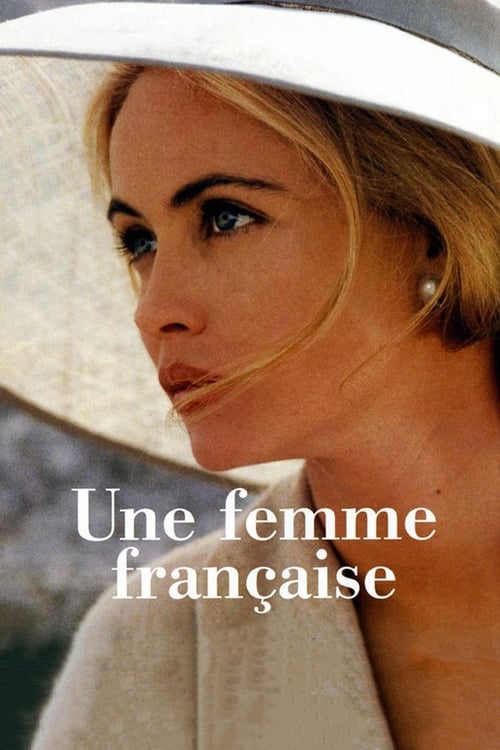
A French Woman
1995
No user ratings available yet
Diversity score: 4.4 out of 10

1982
Director
Daniel Schmid
Runtime
105 minutes
Average Rating
No ratings yetSynopsis
Set amid the European community in an unspecified North African country, a colony on the verge of nationalism just before the war. And colonized is what happens to a French diplomat, Julien Rochelle, when he meets the mysterious beauty Clothilde de Watteville. Schmid 's favorite axiom, that love is projection, never had such a thorough airing. Is Clothilde really the wife of a French official now holed up in Siberia? Or is she Hecate, goddess of black magic and devourer of the Arab boys she meets far from the European quarter? Only our projections know for sure; for the rest, she is a "woman looking out into the night." Drawn from a novel by Paul Morand, who based the main character on his wife Helene, Schmid's film achieves an atmosphere of magic in which psychological credibility is not so much absent as irrelevant-a film that distances itself from the drama it invokes, perhaps as the elusive Clothilde turns her back on the madness she provokes.
Overall Score
Fair
Category Breakdown
LGBTQ+ Representation
The narrative focuses on eroticized, obsessive interactions between the female protagonist and various men. It lacks explicit queer identities or narratives designed to critique heteronormativity, remaining centered on gendered obsession.
Gender Representation
Clothilde disrupts traditional hierarchies as an enigmatic force rather than a passive interest. The film shifts power toward the female figure, leaving the men psychologically unmoored and driven by her presence.
Racial & Ethnic Diversity
While set in a North African colony, the focus remains heavily on the European expatriate community. The setting serves as an atmospheric tool rather than a vehicle for centering non-Western agency.
Religious & Cultural Diversity
The film rejects singular morality, presenting the protagonist through a lens of situational ethics. It uses the colonial environment to suggest a critique of established structures via psychological abstraction.
Disability Representation
There are no discernible depictions of physical or neurodivergent disabilities that serve as central narrative drivers in this work.
Strengths
Areas for Improvement
AI Analysis
Hecate is a surrealist exploration of identity and projection that prioritizes atmosphere over social didacticism. It succeeds in subverting gender tropes by centering a powerful, elusive female figure who destabilizes the men around her. However, the film remains limited by its Eurocentric focus. While the North African setting provides a backdrop of colonial tension, the narrative stays anchored within the European community, missing opportunities for deeper intersectional representation. Ultimately, the film functions as a postmodernist study of the gaze. It favors psychological mystery and the deconstruction of reality over systemic social critique or diverse character perspectives.
1995
2001

1975
1977

1972
2007
1999

2018

1971
1968

1970

1984
No reviews yet. Be the first to share your thoughts on this movie!
Use the rating form above to leave a star rating and optional review.