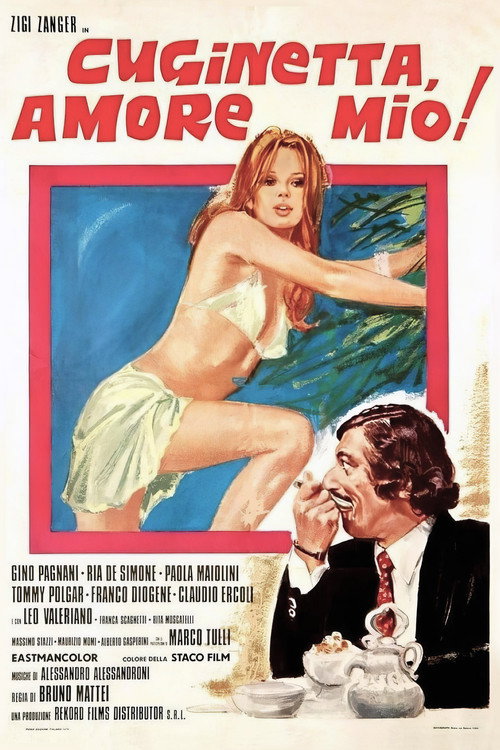
Love Sacrifice
1976
No user ratings available yet
Representation score: 2.7 out of 10

Representation Score
Fair
1976
Director
Flavio Mogherini
Runtime
110 minutes
Average Rating
No ratings yetNew Showbiz Analysis
Lunatics and Lovers is a period-specific Italian comedy that prioritizes social satire over diverse representation. While it effectively mocks the stability of the aristocracy, it does so through a narrow lens of traditional European class structures. The film's main strength lies in its ability to challenge the dignity of the nobility. However, this critique is limited by a lack of demographic variety and a reliance on psychological instability as a comedic device. Ultimately, the work reflects the constraints of 1970s regional filmmaking, offering a critique of class without addressing broader identity-driven narratives.
Category Breakdown
The film revolves around a nobleman's obsession with an imaginary woman. There are no explicit LGBTQ+ identities or critiques of the assumption that everyone is straight or cisgender.
A family challenges a male head of household to reclaim his land. It’s unclear if the female characters have significant roles in driving the story or if they primarily serve economic interests.
The film is set among the Venetian nobility, featuring a homogeneous European aristocratic class. There is no diverse or non-Anglo-Saxon casting.
The narrative dismantles the noble archetype by ridiculing a wealthy man. It criticizes inherited wealth and traditional class hierarchies.
The plot centers on a character's detachment from reality, using psychological instability as a comedic device rather than a nuanced portrayal of neurodivergence.
Present on Screen
Limited or Absent
Official Synopsis
The family of a wealthy nobleman tries to take away his land away after learning that he is having an affair with an imaginary woman.
1976
1973

1966
1961

1974

1972

1975

1973
No reviews yet. Be the first to share your thoughts on this movie!
Use the rating form above to leave a star rating and optional review.