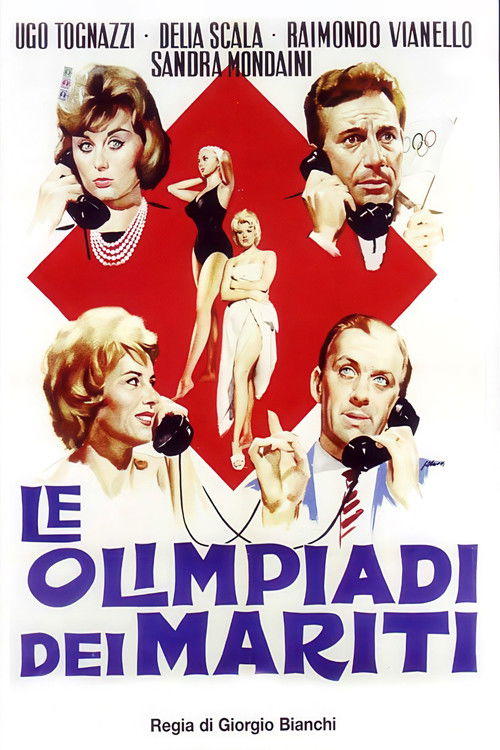
Le Olimpiadi dei mariti
1960
No user ratings available yet
Representation score: 2.0 out of 10

Representation Score
Minimal
1967
XDirector
Luciano Salce
Runtime
100 minutes
Average Rating
No ratings yetNew Showbiz Analysis
Luciano Salce’s comedy is a period-specific look at the Italian middle class. The film explores the social friction between a professional lawyer and his unconventional, artistic wife. While Giuliana’s character offers a minor challenge to strict domestic expectations, the film aligns closely with the demographic norms and social hierarchies of 1960s European cinema. It does not significantly represent underrepresented identities or challenge systemic issues. Overall, the film serves as a comedic exploration of social integration and class status rather than a diverse or inclusive narrative.
Category Breakdown
The film centers on a traditional marriage and does not include any LGBTQ+ characters or non-cisgender identities. It appears focused on heterosexual relationships.
Giuliana stands out slightly from typical domestic roles due to her eccentric, bohemian personality. However, the film does not deeply critique gender power dynamics.
The story reflects the homogeneous society of 1960s Italy. There is no indication of diverse racial backgrounds or non-white perspectives within the main social circle.
The plot examines the tension between bourgeois stability and artistic lifestyles. It stays rooted in traditional class structures without challenging Western institutions.
There is no mention of characters with visible or invisible disabilities in the narrative.
Present on Screen
Limited or Absent
Official Synopsis
Pietro is a young bourgeois lawyer who married Giuliana, a pretty girl who was a little unscrewed, and met at a party of artists. Despite the premises, everything between the two seems to work best.
1960
1975
1955

2004
1966

1982
1975
1960
No reviews yet. Be the first to share your thoughts on this movie!
Use the rating form above to leave a star rating and optional review.