Exam
2003
No user ratings available yet
Diversity score: 5.7 out of 10
1990
Director
Yurii Illienko
Runtime
90 minutes
Average Rating
No ratings yetSynopsis
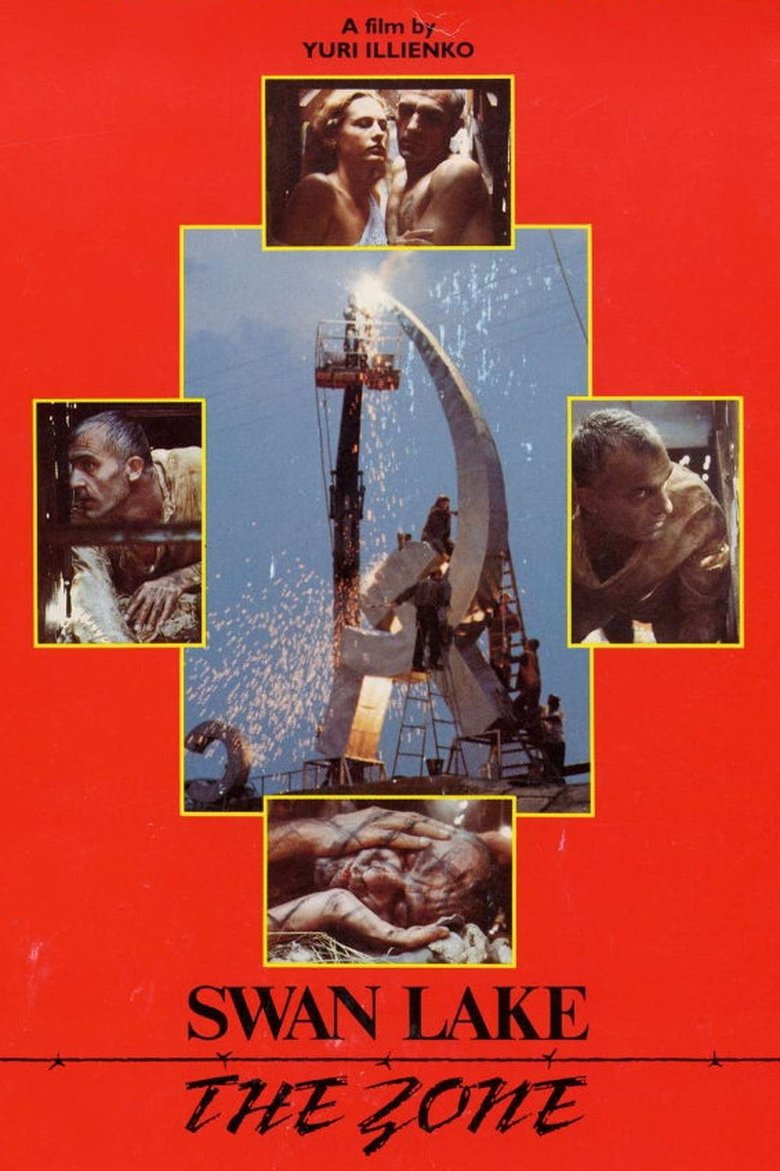
A convict is forced to hide within a model of a hammer and sickle. Here a tragic romance ensues between the convict and woman worker; which is spoilt by the woman's jealous young son. The convict is then forced to undergo a tragic bid for freedom which ends with the beauty of swans contrasted with the imprisoned convicts and the hopeful but ultimately tragic wait by the woman for her lover.
Overall Score
Fair
Category Breakdown
LGBTQ+ Representation
The film lacks any evidence of queer narratives or non-heteronormative identities. The central romance follows a traditional pairing between a convict and a female worker.
Gender Representation
A central female figure drives the narrative, though her agency is complicated by domestic friction. The film avoids stable tropes, focusing instead on the fractured lives of its characters.
Racial & Ethnic Diversity
The production likely reflects the ethnic homogeneity of the late-Soviet era. Without specific casting data, the film appears to function as a localized cultural study rather than an intersectional one.
Religious & Cultural Diversity
The film offers a potent critique of state ideology. By framing the hammer and sickle as a site of confinement, it prioritizes the struggle against oppressive institutional structures.
Disability Representation
There is no information regarding the portrayal of physical or neurodivergent disabilities. The narrative focus remains on systemic and romantic tragedy.
Strengths
Areas for Improvement
AI Analysis
Swan Lake: The Zone is a somber deconstruction of ideological symbols, using tragic realism to critique the intersection of state power and personal agency. It replaces traditional romantic triumphs with a study of systemic confinement. The film's strength lies in its semiotic critique, specifically how it repurposes state iconography to represent restriction. While it lacks modern identity markers, it provides a deep exploration of the individual's struggle against all-encompassing structures. However, the work remains limited by its likely lack of racial and LGBTQ+ diversity. It functions more as a localized critique of Soviet-era institutionalism than a broad study of intersectional identities.
2003
1993
1989

1974

1978
1937
1955

1994

1984

1983
1934
1973
No reviews yet. Be the first to share your thoughts on this movie!
Use the rating form above to leave a star rating and optional review.