
Baby Puss
1943
No user ratings available yet
Diversity score: 1.1 out of 10
1954
NRDirector
Joseph Barbera, William Hanna
Runtime
7 minutes
Average Rating
No ratings yetSynopsis
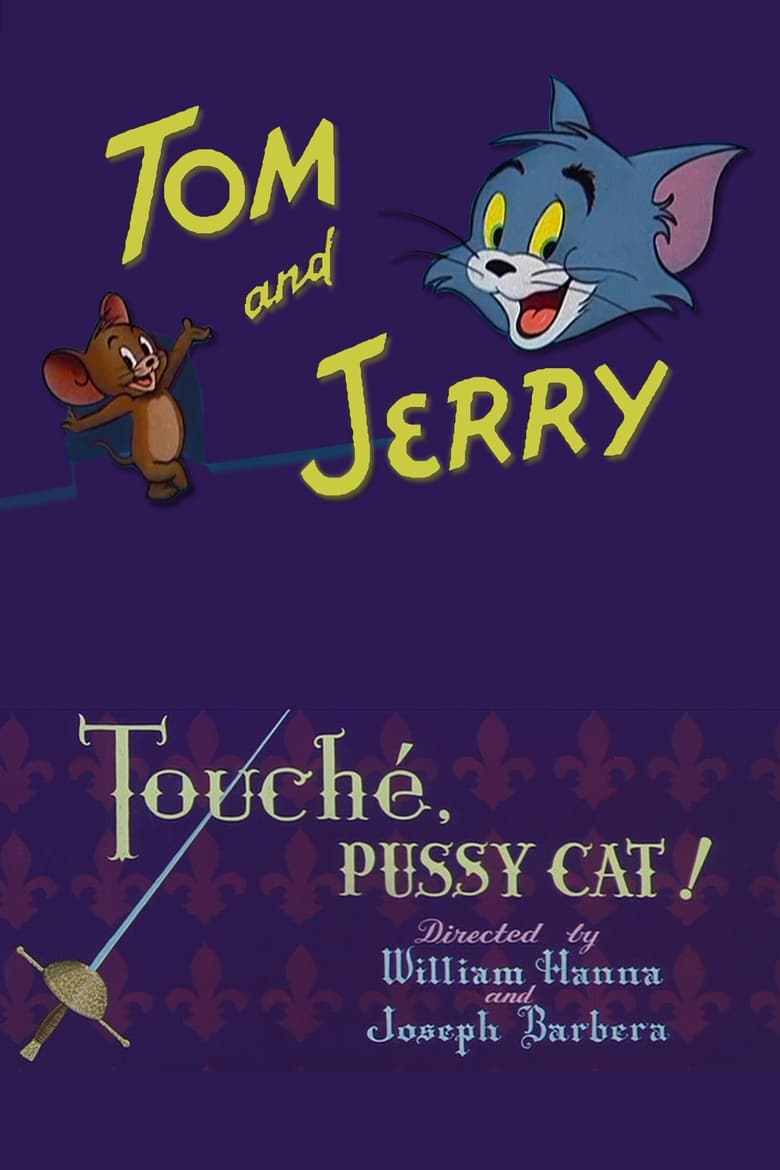
A young mouse arrives at the Parisian headquarters of the King's Mouseketeers with a letter from his father, François Mouse, asking Jerry to teach the lad to be a Mouseketeer. Lessons begin for the French-speaking boy, but although he's charming, he's hopeless and when he gets into a scrape with Tom, Jerry sends the garçon packing. As the boy is leaving Paris, he hears the noise of fighting, and he returns to find Jerry in a fight for his life with Tom. Champagne corks, a paint brush, and a barrel of wine are props in the lad's attack. But has he lost all his clumsiness?
Overall Score
Limited
Category Breakdown
LGBTQ+ Representation
The film focuses entirely on physical conflict between anthropomorphic animals. There are no LGBTQ+ characters or explorations of non-cisnormative identities present.
Gender Representation
The narrative maintains a neutral framework regarding gendered hierarchies. The plot centers on a fencing duel and predator-prey dynamics rather than traditional masculine or feminine roles.
Racial & Ethnic Diversity
Set in a stylized 18th-century France, the film uses anthropomorphic animals that preclude traditional racial representation. It adheres to a homogeneous, Eurocentric aesthetic.
Religious & Cultural Diversity
The story follows traditional comedic structures without engaging in anti-Western or secularist themes. The conflict is framed as a formal, choreographed duel.
Disability Representation
No characters are depicted with visible or invisible disabilities. The young mouse's clumsiness serves as a slapstick trope rather than a meaningful exploration of disability.
Strengths
Areas for Improvement
AI Analysis
Touché, Pussy Cat! is a classic mid-century slapstick short that prioritizes physical comedy over social commentary. The narrative is built on the biological tension between predator and prey, using anthropomorphic characters to drive a choreographed fencing duel. Because the characters are animals in a stylized historical setting, the film lacks traditional racial, ethnic, or gendered social hierarchies. It functions within the established comedic frameworks of its era, focusing on timing and slapstick rather than identity-based storytelling. Ultimately, the film does not attempt to subvert social structures or engage with intersectional themes, resulting in a narrow focus on pure physical entertainment.
1943
1944
1944
1950
1957
1951
1957

1945
1953
1942
1942
1943
No reviews yet. Be the first to share your thoughts on this movie!
Use the rating form above to leave a star rating and optional review.