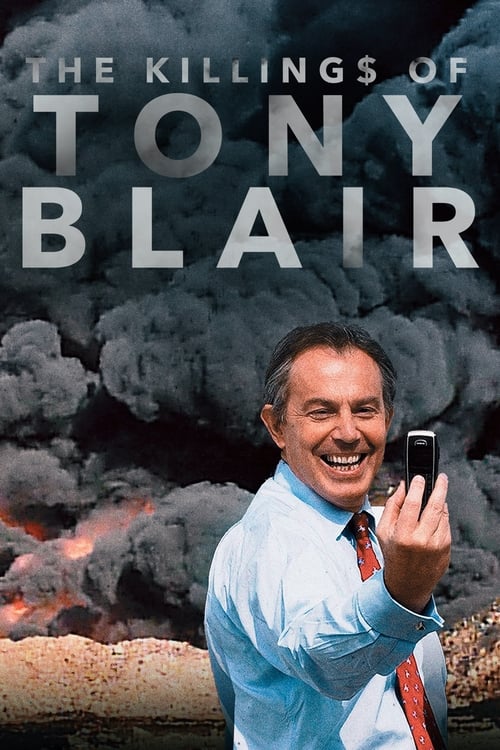
The Killing$ of Tony Blair
2016
No user ratings available yet
Diversity score: 6.7 out of 10

2020
Director
Jennifer Abbott, Joel Bakan
Runtime
106 minutes
Average Rating
No ratings yetSynopsis
Two decades after the initial exposé of the corporation, this follow-up unveils a world now fully remade in its image and perilously close to fascism.
Overall Score
Fair
Category Breakdown
LGBTQ+ Representation
The documentary focuses on macroeconomic structures and legal personhood rather than interpersonal relationships. Consequently, there is no evidence of LGBTQ+ presence or critiques of heteronormativity within the systemic analysis.
Gender Representation
The film avoids gendered character arcs, focusing instead on economic agency. While it touches on how corporate hegemony standardizes social roles, it does not explicitly center feminist theory.
Racial & Ethnic Diversity
Using a post-colonial lens, the film examines how multinational corporations exploit the Global South. It highlights how corporate interests exacerbate global inequality and impact diverse, non-Western populations.
Religious & Cultural Diversity
The narrative provides a profound critique of Western institutional structures and democratic sovereignty. It deconstructs traditional norms by framing the corporation as a corrupting force against the citizenry.
Disability Representation
The documentary concentrates on macro-level socioeconomic impacts. It does not provide specific depictions of physical disabilities or neurodivergence as individual narrative elements.
Strengths
Areas for Improvement
AI Analysis
The film operates as a systemic critique rather than a character-driven narrative. Because it prioritizes structural analysis over individual stories, it lacks traditional metrics for interpersonal representation like gender or disability. However, the documentary excels in its cultural and racial analysis. By employing a post-colonial framework, it successfully highlights the impact of corporate power on the Global South and challenges the stability of Western institutional norms. Ultimately, the work is a study of power hierarchies. Its diversity is found in its deconstruction of global economic structures rather than in the representation of specific identity groups.
2016
1992

2010

2008
2019
2011

2010

2023

2011

2004
2018

2020
No reviews yet. Be the first to share your thoughts on this movie!
Use the rating form above to leave a star rating and optional review.