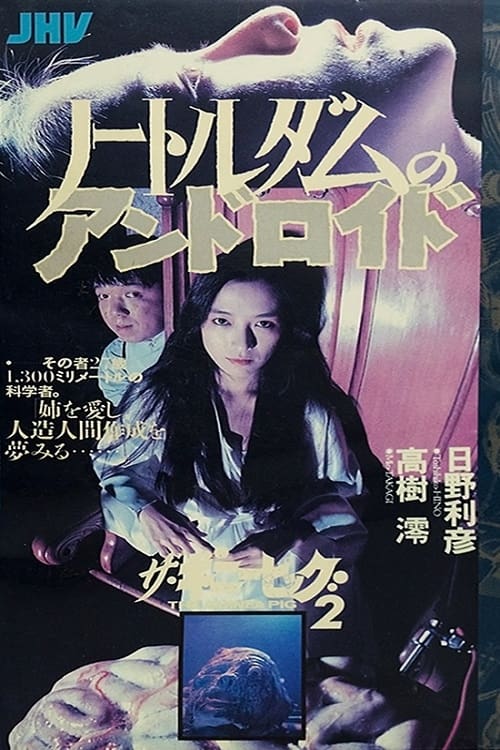
Guinea Pig Part 5: Android of Notre Dame
1989
No user ratings available yet
Representation score: 5.3 out of 10
Representation Score
Good
2010
RDirector
Hiroshi Takahashi
Runtime
94 minutes
Average Rating
No ratings yetNew Showbiz Analysis
The film operates primarily as a genre-driven horror piece where representation is incidental to the plot. While it avoids some gendered clichés by centering a female scientist, it lacks intentional depth reflecting multiple aspects of identity. Diversity elements, such as the multi-ethnic subjects, are framed through a clinical, experimental lens rather than a social one. The narrative focuses on the mechanics of horror and medical ethics rather than deconstructing systemic norms. Ultimately, the film lacks the progressive choices necessary to move beyond a standard genre framework.
Category Breakdown
The story centers on a heterosexual relationship between Kaori and Motojima. There is no visible evidence of queer identities or any active critique of the assumption that everyone is straight or cisgender.
Dr. Hattori serves as a powerful central figure of authority. Her role as a driving scientific force disrupts traditional clichés of female passivity in horror.
The narrative includes Manchurian, Russian, and Japanese subjects within its medical framework. This multi-ethnic scope moves the film beyond a purely homogeneous casting model.
The film critiques the corruption of medical institutions and scientific authority. It focuses on the localized horror of malpractice rather than broader ideological frameworks.
Characters suffer neurological or physical trauma due to medical violence. They appear to function as tragic plot devices rather than individuals with independent ability to act.
Present on Screen
Limited or Absent
Official Synopsis
Dr. Hattori and her husband watch footage of brain surgery experiments with Manchurian, Russian and Japanese guinea pigs that had been found in the basement of a wrecked hospital. Out of the blue, there is a white light and when they look back, they see they children Ota Miyuki and Kaori staring at the light. Years later, Miyuki vanishes from the Tama Medical University Hospital and her sister Kaori, Miyuki's boyfriend Motojima and detective Hirasawa are seeking her. However, Miyuki and the teenagers Kazochi, Takumi, Hattori and Rieko have been submitted to a nightmarish experiment by Dr. Hattori and her team with tragic results.
1989
1960
2018
1962
2010
2000

1991
2014
No reviews yet. Be the first to share your thoughts on this movie!
Use the rating form above to leave a star rating and optional review.