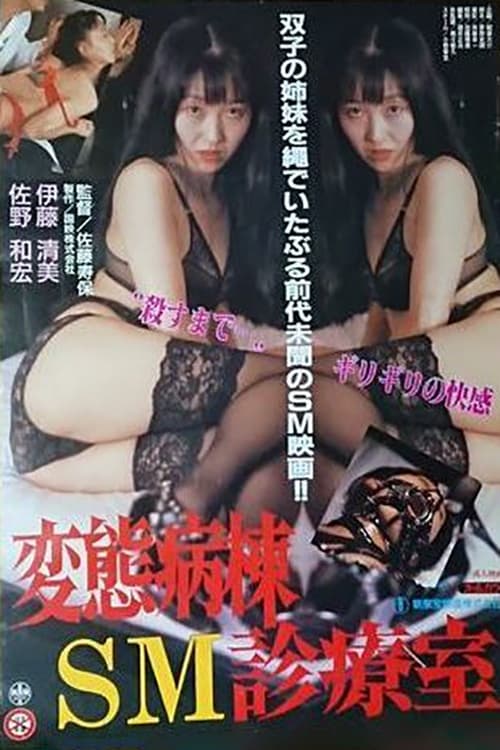
Pervert Ward: S&M Clinic
1989
No user ratings available yet
Representation score: 7.2 out of 10
Representation Score
Limited
1991
Director
Hisayasu Satō
Runtime
61 minutes
Average Rating
No ratings yetNew Showbiz Analysis
Hisayasu Satō’s work delves into transgressive themes and the breakdown of social norms through extreme psychological horror. While the film challenges social stability, it does so by focusing on individual cruelty rather than systemic issues. The narrative is driven by predatory power dynamics and a highly distorted patriarchal structure. The focus remains on the psychological fragmentation of characters within a closed, domestic setting. Ultimately, the film reinforces traditional, albeit pathological, power hierarchies. It lacks intentional characters who reflect more than one aspect of diversity, focusing instead on the dark impulses of the human psyche.
Category Breakdown
The film does not include any explicit references to LGBTQ+ identities or non-straight relationships. The narrative centers around a dysfunctional patriarchal relationship between a father, his daughter, and kidnapped women.
The story heavily relies on a rigid gender hierarchy and depicts extreme violence against women to reinforce a male antagonist's desire for control and subservient femininity.
As a 1991 Japanese production, the cast and setting are culturally homogeneous. The film focuses on a specific domestic context without incorporating diverse ethnic backgrounds.
The film focuses on individual pathology and the corruption of the family unit. It does not address systemic critiques of social or religious institutions.
A wheelchair-bound daughter serves as a central plot element. However, her disability primarily functions as a catalyst for the antagonist's motivations rather than a source of ability to act.
Present on Screen
Limited or Absent
Official Synopsis
A deranged doctor lives in an abandoned hospital together with his wheelchair-bound daughter. Frustrated by normal women's perceived imperfections, the doctor kidnaps them and subjects them to sadistic tortures to turn them into subservient women for his childlike daughter to play with.
1989

1969
1991

1960
2002
1935

1985

2005
No reviews yet. Be the first to share your thoughts on this movie!
Use the rating form above to leave a star rating and optional review.