Lonely Star of Osaka
1980
No user ratings available yet
Representation score: 5.0 out of 10
Representation Score
Fair
2010
Director
Jin Seung-hyeon
Runtime
108 minutes
Average Rating
No ratings yetNew Showbiz Analysis
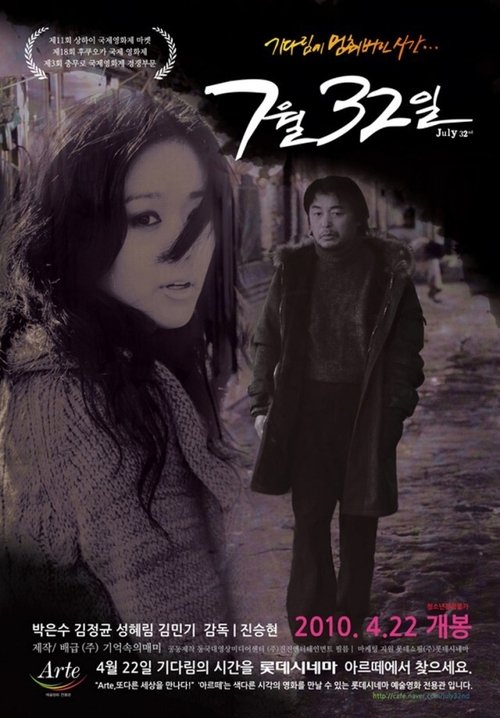
July 32nd is a character-driven drama that emphasizes personal longing and individual ability to act over broader social commentary. While it offers a non-Western perspective through its South Korean setting and historical context, it adheres to a traditional narrative structure. The film's strength lies in its exploration of institutional failure and the emotional weight of familial trauma. However, it lacks explicit markers of diversity, such as LGBTQ+ representation or a critique of gender hierarchies, which limits its progressive impact. Ultimately, the film serves as a culturally specific drama rather than a work of systemic subversion, focusing on the personal consequences of broken promises and the pursuit of justice.
Category Breakdown
The film does not include explicit LGBTQ+ characters or narratives focused on non-assuming gender matches what was assigned at birth identities. The story centers around a paternal bond and a cycle of revenge.
The narrative follows a daughter's journey from being abandoned to becoming an agent of vengeance. It uses a traditional dramatic structure focused on familial trauma.
As a South Korean production, the film provides a non-Western perspective. It is set in the specific historical and regional context of 1987 South Korea.
The story delves into subjective morality and questions authority. It portrays established institutions like the police as antagonists to the individual experience.
There is no indication of the portrayal of physical, neurodivergent, or mental health conditions in the film.
Present on Screen
Limited or Absent
Official Synopsis
Directed by Jin Seung Hyun, the curiously titled indie drama July 32nd is inspired by the short story "Full Moon" by acclaimed writer Ko Un. Screened at the 2008 Fukuoka Film Festival and the 2008 Shanghai Film Festival, the film depicts the tumultuous relationship of a killer and his daughter, whose lives are upturned on July 31, 1987. Pursued by the police, he leaves his five-year-old daughter in someone else's care, promising to pick her up the next day. But the next day never comes because he soon gets arrested. Years later, the abandoned daughter has grown up, and the waiting has turned into the longing for revenge.
1980
2013

2009

2011

2014

1989

2010

2020
No reviews yet. Be the first to share your thoughts on this movie!
Use the rating form above to leave a star rating and optional review.